Book Reviews

‘The best moments in reading are when you come across something - a thought, a feeling, a way of looking at things - which you had thought special and particular to you. And now, here it is, set down by someone else, a person you have never met, someone even who is long dead. And it is as if a hand has come out, and taken yours.’ Alan Bennett

“Many a book is like a key to unknown chambers within the castle of one’s own self.” ― Franz Kafka

Showing posts with label past. Show all posts

Tuesday, 1 July 2014

Jellybird - Lezanne Clannachan


'It's facing your own secrets that takes the greatest courage.'


We meet Jessica Byrne as she has returned to the coastal caravan park owned by her mother, Birdie. Why has she left her life in London, her lovely husband Jacques, and her growing career and returned here? What has happened? Then we are taken back to earlier in the same year, to a first meeting Jessica has with a woman named Libby, who is interested in buying some of the unique jewellery that Jessica designs and makes. Their acquaintance becomes a friendship which Jessica is glad of, it feels like something she didn't have when she was younger. But Jacques seems uncertain about Libby, and Jessica doesn't understand his reaction, he normally likes everyone. Yet she does see that Libby has a domineering personality, and it seems like she becomes controlling of Jessica at times. Libby admits 'I can be tricky and difficult.'....'She bends and shapes words like balloon animals, Jessica thinks.' Then Jessica notices Jacques and Libby in close conversation together and becomes suspicious.

The narrative then takes us further back in time to when Jessica was a lonely teenager, her parents marriage falling apart, her father leaving the family, her mother distracted. Jessica meets Thomas one day, another lonely, ghostly soul, with a cruel father, and they find companionship with each other. Through the novel we move back and forth as more of the past is revealed, and events move on in the present. It's seventeen years since Jessica has seen Thomas, he disappeared, in a desperate state, and she doesn't know where he is, if indeed he is alive - he was feared drowned at the time. Jessica evidently has deep-rooted issues unresolved from these times, as demonstrated by her self-harming. Revisiting these events, and the vivid memories from her childhood, also brings back thoughts of the unsolved brutal murder that lies hidden there. 

There is plenty of uncertainty and suspense within this tense psychological debut novel,  there were moments and revelations which caused me to think twice, to rethink what I thought I knew, and an ending that I had not predicted. I was absorbed in the story and I enjoyed the twists and turns, though sometimes I think I might have liked an ever so slightly quicker pace to parts of the storyThe portrayal of growing up and of teenage insecurity and searching for identity, and of struggling to get through those difficult years whilst also dealing with family break-ups and disfunction is strong and really convincing; I was impressed by this aspect of the narrative in particular. The author writes well about so many different relationships; close female friends, partners, parents and children, teenagers. I liked how the story moved from the present to the past and back, building the tension. There's a dark tone and an air of menace to some aspects of the story which makes it an unsettling and intriguing read that depicts both lighter and darker sides of life. Jellybird is an intriguing, engaging and suspenseful debut from a talented new writer. It'll be interesting to see what Lezanne Clannachan does next.


Thank you to the author for kindly sending me a copy of her novel for an honest review.

Author links - twitter @LezanneClan | website |
Published by Orion

Other blog reviews - Girl Vs Bookshelf | Reading Matters | Liz Loves Books | Random Things |

Friday, 13 June 2014

Lacey's House - Joanne Graham


'I wanted to walk right out of my life and leave it behind.'

Sometimes one way I can see how much I loved a book is by how many sentences or paragraphs I tab with little sticky notes to come back to and think about again once I've finished. There were a lot of places I marked in this book. There were parts of the prose that resonated with me, that moved me, and parts where the use of language particularly appealed to me. In summary, I thought this was a very special book. 

Rachel Moore has suffered a sad loss and moves from Birmingham to the countryside, to get away and start afresh. She is a solitary soul, having grown up in care, though having a brief period with some loving foster parents. She meets Lacey Carmichael, the older lady living next door. Lacey is another isolated soul, teased by the local children, labeled as the mad woman down the road, she is misunderstood and lonely. Then she is accused of a terrible crime.

A connection forms between them, and they begin to trust each other, and to share painful things with each other that they have never told anyone else. They've both experienced such sadness and from sharing their secrets a friendship blossoms despite the difference in their ages. The development of this friendship between Rachel and Lacey over the course of the book is wonderful and fascinating to observe. As time passes, Rachel thinks about how she feels about Lacey: 'I found that I cared for her very deeply, that her vulnerability had somehow pulled me closer and I carried her words, her story, like a heavy cloak about my shoulders.' Rachel attempts to express the pain and sorrow in Lacey's past through her artwork. 

'Her memories came home with me. Walking straight into my studio, I mixed them with acrylics; different shades of blue and deep, swirling turquoise that I threw at the huge canvas as I painted her sorrow, a raging, tumultuous thing that, when I was finished, left me breathless and empty.'

The chapters alternate between the two of them, Rachel's in the first person and Lacey's in the third, and the story progressed and worked really well written in this way.

Rachel likes and trusts Lacey, but doesn't yet know the whole truth; she, and the reader, are kept in suspense. Rachel fears that in the future she too might experience the depths of isolation that Lacey has;

'In fifty years time would it be me standing where Lacey was, with the past eating into me from the inside? I recoiled from the idea of experiencing for myself the stark loneliness that had been so apparent in Lacey's eyes.'

Joanne Graham writes with immense insight, empathy, warmth and poignancy about these women's lives and pasts, and writes sensitively and honestly about themes of mental health, loneliness and loss of a child, about damaging things that happen in people's lives which they are scarred by and understandably spend much time and energy grappling with. I felt emotional as I read, I was angry at the cruelty in Lacey's past, at what people could get away with. So much of a person's past can be hidden away, unknown, unvoiced. I empathised with and liked both Rachel and Lacey, and they both felt very real to me as I was reading. As Lacey thinks to herself, 'How sad for them both that they had to grow up without loving families.' As well as creating engaging, rounded characters, the author tells a powerful story. 

For me, Lacey's House is a wonderful, incredibly moving and very special story of female friendship across generations. It has stayed in my mind since reading it and it made me think. Beautifully, sensitively written, perceptive and touching, I think it was a very worthy recipient of the Luke Bitmead Bursary, a superb debut novel and I'd say it's one of my reading highlights of the year so far.


Thank you to the publisher for kindly sending me a copy of this novel for an honest review. 

Author links - twitter @YarrowH | website
Published by Legend Press

Thursday, 5 June 2014

The People in the Photo - Hélène Gestern


'Sometimes I wonder what 'truth' it is we're chasing after exactly, and what kind of state it will leave us in if we find it.'

Hélène Hivert is an archivist in Paris. She places a newspaper advertisement with a photograph, asking for information about the people in it. One of them is her mother, Nathalie, and then there are two men in the photography with her. It was taken in 1971 at a tennis tournament in Interlaken. Hélène's mother died when she was only three years old. She receives a response from Stéphane, informing her that his father Pierre was one of the two men in the photograph. Stéphane is Swiss, a biologist currently living in Kent, England. 

After his initial response, further correspondence is undertaken between the two, and they reveal memories and gaps in their pasts to each other, increasingly able to confide in each other. They uncover more about their pasts and those of their parents. But it remains to be seen whether the things they discover will help or hurt them, bring them relief and understanding or pain and sadness; either way, the revelations will affect and change their lives:

'...I'm aware that digging up the past is risky. Who knows what secrets they were trying to protect us from and at what cost?'

Hélène's father disclosed little about her mother, and she was raised by a loving stepmother too. After her father's death she found the photograph of her mother with the two men, and decided to now try and find out more about Nathalie. Some of the pair's relatives have passed away, so they must look harder sometimes if they are to continue the search for the truth that has been hidden in history.

I loved this book. Once I started reading, I was captivated by the story, I cared about the characters and I didn't want to stop reading until I'd finished it. The narrative is told predominantly through the exchanges between Hélène and Stéphane via the content of their letters, emails and text messages. It was incredibly moving to be an observer of their exchanges, reading how their connection to each other developed and evolved as they corresponded, and to notice the similarities in some of the feelings and emotions they had experienced in their lives:

'I too feel that inner emptiness, which you describe so poignantly. And, as I grow older, I find it increasingly hard to bear.'

There is a very understandable need to find answers, to discover their real background, so that they might feel a truer sense of themselves too:

'You told me you found it difficult to come to terms with your background. As for me, I've been plagued by anxiety my whole life. My mind is filled with images I can't explain, scenes of catastrophe and things falling apart. I have rarely been able to shake this sense of anguish, even at what should have been the happiest times of my life.'

This aspect in particular really appealed to me; who doesn't wonder about those parts of their past and their family's past that they know little of, and if this relates to a parent, even more so. 

Another part to the narrative, interspered amongst the correspondence, are descriptions of further old photographs; these are uncovered as the story progresses, and each sheds light on another aspect of the past. Each is beautifully described by the author, so that without having them in front of us, it is almost as if we do, and we can picture them in our minds eye. 

The People in the Photo is a wonderful, emotional and very moving read, definitely a keeper for me, and a book I'd love to read again. I do like epistolary novels and this form works very well here, brought up to date by the use of email and text. There are themes of love and friendship, identity and memory, confronting and dealing with the past, and finding forgiveness. There's always a sense of intrigue and wonder when we look at old photographs of people and this novel captures this and delivers a great story via this starting point. One of my favourite reads so far this year. Beautifully written and translated, I loved the structure and the way the story was told, so I'd certainly recommend this novel. I hope there will be more novels from this author.


I was kindly sent a review copy of this novel - this is my honest review.

Published by Gallic Books | twitter @gallicbooks
Translated from the French by Emily Boyce and Ros Schwartz

Sunday, 20 April 2014

What makes a novel historical? - Jane MacKenzie - Author guest post

Today I'm delighted to share a guest post with you from author Jane MacKenzie. Jane's debut novel is Daughter of Catalonia, and is published by Allison and Busby on April 17th 2014. 


What makes a novel historical? by Jane MacKenzie


People are fascinated by the past. So, it’s understandable why so many good novels might be termed historical, including my own, Daughter of Catalonia. The period of my novel ranges from 1935 to 1958, before I was born. But it doesn’t feel like a historical novel to me, and when I look back on how the book was born it isn’t a period in history that I think about first, but a place.

I have a home in Collioure, surely one of the most beautiful places in France, just twenty kilometres from Spain, and full of Catalan influences. Matisse and Derain discovered colour here, and Picasso spent an important part of his life close by. With the Mediterranean on one side, and the Pyrenees on the other, the region grows peaches, and cherries, and apricots, and above all grapes, on the plains and on craggy hillsides where the sun bakes the ground hard and the vines cling like crow’s feet to the rocky soil. But this isn’t a region of grand wine chateaux, or indeed the glitzy Riviera. It is a place where fishermen and wine growers have always eked out a living a bit like the crofters in my native Scotland – small-scale and hardy, and keeping a lot of the good stuff for themselves!

So they made me want to write, but not the typical book by English settlers about how they converted a farmhouse, or the story of the holidaymaker who meets a romantic Frenchman. I wanted to write about the Catalans themselves.

It was a 91 year old ex-fisherman whose stories set me exploring the region’s past, and I ended up writing a novel which explores the war years, and the effect of the German occupation on ordinary lives in France. Setting the main action of the novel in 1958 allowed me to explore how people recovered and resumed their lives after the war, and I kept my promise to myself, so that my key characters are the fishermen, the schoolteacher  and the bar owner who make up the ordinary life blood of local villages.

But to me they don’t feel like historical characters. Perhaps a real historical novel is one set before living memory. The people who were falling in love and having babies in Collioure in 1958 are still alive today, and I know many of them. It is living history that I’ve written about, and the streets through which my own lovers walk, and the vineyards and the mountains which are their backdrop, are as real and unspoiled today as they were then. I imagine them now as elderly people, strolling down for a coffee or glass of wine in my favourite local café. They would be the age of my father, and he isn’t yet history!


But the research required to write the book was just as intensive as I imagine writing about the 15th century must be, and it focuses the mind to know that if you get your facts wrong you’ll get your knuckles rapped by readers who remember the period perfectly! And my next novel is set in the 1960s, so the pressures can only increase. A recent BBC survey of eminent academics came to no firm conclusion about when history stops and the ‘current era’ begins. One said history began a second ago. Another said it ended in 1968. For me it will be when I start writing about years I remember myself, so that I’m not sent flying to reference books to research. But where would be the fun in that?

~~~~~

About the novel...

When charismatic Spaniard Luis elopes with high born Elise from Paris in 1935, and takes her to live in Catalan France, they little know that war is going to rip France apart, separate them, and ultimately destroy them both, sending Elise into unhappy exile in England, and Luis to his death in the French Resistance.
It is many years later, in 1958, that their daughter Madeleine escapes to France, to the beloved village of her childhood memory, to seek out her roots and the truth of her parents’ story. Her journey liberates her from a childhood of stifled gentility in her grandparents’ home, and takes her through glitzy Paris and on to the heat and passion of Catalonia. But her arrival in her childhood village unleashes more than she had bargained for, as Madeleine confronts the secrets of war and learns the shocking truth behind her father’s death. And as her own Catalan love story begins, she has to come to terms with her past, and learn to forgive and to believe in the legacy of love her parents left behind.
Daughter of Catalonia is a story about love and war, about rupture and healing, and about survival and ultimately hope. It is a love story born in the heat of the Mediterranean sun.
About the author...

Jane MacKenzie has lived and worked in many far flung corners of the world, including the Gambia and Switzerland. Having built her own business and enjoyed a spell working at CERN in Geneva, Jane realised her dream of writing. She splits her time between the Scottish Highlands and Roussillon in the South of France, the region which inspired Daughter of Catalonia.  
Follow her on twitter: @JaneFMackenzie 
Author's Website: www.janemackenzie.co.uk

Thursday, 19 December 2013

His Father's Son - Tony Black


Joey Driscol went to Australia to make a new life for himself and his wife Shauna, trying to leave behind their problems in their homeland of Ireland. They've got a lovely young son now, Marti. However, we soon discover that their life is far from joyful and they are both still weighed down in their own ways by the memories and events in the past, with little communication between them, the happiness all but gone from their relationship. This uneasy situation culminates in Shauna taking Marti away one day, leaving Joey without the best thing in his life, his son. When he discovers where they have gone - back to Ireland - it's an enormous challenge for him to return there and meet again the family he hasn't seen for years, but one he has to face if he is going to see Marti and Shauna again.

This was a compelling, at times very sad story that is full of raw emotion, difficult relationships, fierce love and the highs and lows of life. The author writes movingly about what matters in life, and about how people can carry hurt from the past with them for many years without really facing it, trying to protect themselves and paper over the cracks but becoming susceptible to pain and depression as the worries and ghosts persist inside. The depth of love Joey feels for his dear son Marti, and the strain of having to revisit the past, is strongly evoked, and I felt for them all as I read. The characters were very well drawn and came powerfully to life, most of all Joey and Marti, and also Shauna who is battling the Black Dog. I think I would have liked to have known even more about her; having said that I felt that the focus of the story was right, with Joey and Marti's experiences foremost, and Shauna's thoughts seen through extracts from her diary, read by Joey. We learn of how each of them feels about, and views, the situation, the contrast in their perceptions, and the experiences of all three of them are important to the story. I could feel the awful pain when Joey realised Marti had gone and what he must do, and I could feel the anxiety and confusion as Marti tried to get to grips with his new surroundings in Ireland. I felt I knew Joey most of all though, the things that brought him immense happiness and the things that were a source of great sadness. 

I became involved in the book and willed things to go well for them, for this little family of three. The sense of place in both settings of Australia and Ireland felt real to me, and the use of vernacular language at times added to the authenticity of the characters. There is an element of mystery to the tale too; what happened in the past and what will happen in the future?

His Father's Son is beautifully written; a thoughtful and poignant read with an immense honesty about the writing. I felt the author wrote with a deep understanding of individuals and of family relationships and the story held many truths about how dark times in the past can haunt us and threaten our present, and the strength it requires in order to face that past.  Despite the intense, emotional nature of the story overall, there are light touches too and there is humour and innocence. A powerful, moving book.

Source: proof copy, many thanks
Publisher: Black and White
Author links: twitter @tonyblackuk | website
Other reviews: Liz Loves Books | Random Things |

Friday, 25 October 2013

Ethan's Voice - Rachel Carter


Ethan is eleven-years-old and he lives with his mum and dad on a canal boat. He hasn't spoken for some time, around four years, though he can't remember quite when he stopped speaking, or why he did. He is currently schooled at home by his mum, but near the beginning of the story there is talk about him possibly trying to go back to school one day. This is something that terrifies Ethan. He is content learning at home and spending time at the pond. Then one day Ethan meets Polly, who is newly arrived on the canal with her mum Jackie; she is temporarily separated from Polly's father. Polly is missing her dad but despite this she is a happy, friendly and kind girl and proves to be a wonderful influence on Ethan. Together they enjoy various outings around the canal, sharing activities.


Ethan writes down in a notebook what he cannot say out loud so that he can still communicate with Polly. Their connection means though that she understands a lot of what he is feeling and sometimes a nod from him is enough. Polly helps Ethan and with the aid of her friendship and kindness, he starts to recall memories that are painful, and may go towards an understanding of why he stopped speaking. Between them they start to piece together what may have happened in his past that led to his silence.


Ethan's Voice is a well written story of friendship and kindness. A sweet, joyful and believable friendship is formed between Ethan and Polly, and both of these likeable characters came to life for me as I read. Despite Ethan not speaking we still get to know him, and Polly, and I became involved in his tale and felt his story was told clearly, honestly and with sympathy by Rachel Carter. It's an enjoyable, moving tale, an accomplished debut written with warmth. 

With Ethan's story that he himself is writing about a knight, the author creates a clever extra little layer that parallels the main story. The story also looks at how parents try and protect their children and how misunderstandings can inadvertently arise, and though primarily focussed on Ethan and Polly, I got a strong sense of his parents' anxiety and love for him too. I believe this book is aimed at children aged 9 years old and up, and that would seem about right, though I very much enjoyed reading it myself as an adult.

Published by Scholastic

Saturday, 3 August 2013

The Never List - Koethi Zan - Extract and Giveaway


Book news: 

The Never List by Koethi Zan is published by Harvill Secker on 1st August 2013. It sounds like a dark and compelling read which I am looking forward to reading and reviewing when I feel brave enough...! You can read the first chapter below, and there's a giveaway to win one of three copies of the novel. 


About the book:


There were four of us down there for the first thirty-two months and eleven days of our captivity. And then, very suddenly and without warning, there were three. Even though the fourth person hadn’t made any noise at all in several months, the room got very quiet when she was gone. For a long time after that, we sat in silence, in the dark, each of us wondering what this meant for her and for us, and which of us would be the next in the box.


NEVER GET IN THE CAR

For years, best friends Sarah and Jennifer kept what they called the ‘Never List’: a list of actions to be avoided, for safety’s sake, at all costs. But one night, they failed to follow their own rules.

NEVER GO OUT ALONE AFTER DARK

Sarah has spent ten years trying to forget her ordeal. But now the FBI has news that forces her to confront her worst fears.

NEVER TAKE RISKS

If she is to uncover the truth about what really happened to Jennifer, Sarah needs to work with the other women who shared her nightmare. But they won’t be happy to hear from her. Because down there in the dark, Sarah wasn’t just a victim.

NEVER TRUST ANYONE


About the author:

Koethi Zan was born and raised in rural Alabama. She attended Yale Law School and currently lives in an old farmhouse in upstate New York. The Never List is her first novel. 


~~~~~

Extract from The Never List...


CHAPTER 1


There were four of us down there for the first thirty-two months and eleven days of our captivity. And then, very suddenly and with- out warning, there were three. Even though the fourth person hadn’t made any noise at all in several months, the room got very quiet when she was gone. For a long time after that, we sat in silence, in the dark, wondering which of us would be next in the box.

Jennifer and I, of all people, should not have ended up in that cellar. We were not your average eighteen-year-old girls, abandoning all caution once set loose for the first time on a college campus. We took our freedom seriously and monitored it so carefully, it almost didn’t exist anymore. We knew what was out there in that big wide world better than anyone, and we weren’t going to let it get us.
We had spent years methodically studying and documenting every danger that could possibly ever touch us: avalanches, disease, 
earthquakes, car crashes, sociopaths, and wild animals—all the evils that might lurk outside our window. We believed our paranoia would protect us; after all, what are the odds that two girls so well versed in disaster would be the ones to fall prey to it?
For us, there was no such thing as fate. Fate was a word you used when you had not prepared, when you were slack, when you stopped paying attention. Fate was a weak man’s crutch.
Our caution, which verged on a mania by our late teens, had started six years earlier when we were twelve. On a cold but sunny January day in 1991, Jennifer’s mother drove us home from school, the same as every other weekday. I don’t even remember the accident. I only recall slowly emerging into the light to the beat of the heart monitor, as it chirped out the steady and comforting rhythm of my pulse. For many days after that, I felt warm and utterly safe when I first woke up, until that moment when my heart sank and my mind caught up with time.
Jennifer would tell me later that she remembered the crash viv- idly. Her memory was typically post-traumatic: a hazy, slow-motion dream, with colors and lights all swirling together in a kind of operatic brilliance. They told us we were lucky, having been only seriously injured and living through the ICU, with its blur of doctors, nurses, needles, and tubes, and then four months recovering in a bare hospital room with CNN blaring in the background. Jennifer’s mother had not been lucky.
They put us in a room together, ostensibly so we could keep each other company for our convalescence, and as my mother told me in a whisper, so I could help Jennifer through her grief. But I suspected the other reason was that Jennifer’s father, who was divorced from her mother and an erratic drunk we had always taken pains to avoid, was only too happy when my parents volunteered to take turns sitting with us. At any rate, as our bodies slowly healed, we were left alone more often, and it was then that we 
started the journals—to pass the time, we said to ourselves, both probably knowing deep down that it was in fact to help us feel some control over a wild and unjust universe.
The first journal was merely a notepad from our bedside table at the hospital, with Jones Memorial printed in Romanesque block letters across the top. Few would have recognized it as a journal, filled as it was only with lists of the horrors we saw on television. We had to ask the nurses for three more notepads. They must have thought we were filling our days with tic-tac-toe or hangman. In any event, no one thought to change the channel.
When we got out of the hospital, we worked on our project in earnest. At the school library, we found almanacs, medical journals, and even a book of actuarial tables from 1987. We gathered data, we computed, and we recorded, filling up line after line with the raw evidence of human vulnerability.
The journals were initially divided into eight basic categories, but as we got older, we learned with horror how many things there were that were worse than PLANE CRASHES, HOUSEHOLD ACCIDENTS, and CANCER. In stone silence and after careful deliberation, as we sat in the sunny, cheerful window seat of my bright attic bedroom, Jennifer wrote out new headings in bold black letters with her Sharpie: ABDUCTION, RAPE, and MURDER.
The statistics gave us such comfort. Knowledge is power, after all. We knew we had a one-in-two-million chance of being killed by a tornado; a one-in-310,000 chance of dying in a plane crash; and a one-in-500,000 chance of being killed by an asteroid hitting Earth. In our warped view of probability, the very fact that we had memorized this endless slate of figures somehow changed our odds for the better. Magical thinking, our therapists would later call it, in the year after I came home to find all seventeen of the journals in a pile on our kitchen table, and both my parents sitting there waiting with tears in their eyes.

By then I was sixteen, and Jennifer had come to live with us full time because her father was in jail after his third DUI. We visited him, taking the bus because we had decided it wasn’t safe for us to drive at that age. (It would be another year and a half before either of us got a license.) I had never liked her father, and it turned out she hadn’t either. Looking back, I don’t know why we visited him at all, but we did, like clockwork, on the first Saturday of every month.
Mostly he just looked at her and cried. Sometimes he would try to start a sentence, but he never got very far. Jennifer didn’t bat an eye, just stared at him with as blank an expression as I ever saw on her face, even when we were down in that cellar. The two of them never spoke, and I sat a little away from them, fidgeting and uncomfortable. Her father was the only thing she would not discuss with me—not one word—so I just held her hand on the bus back home each time, while she gazed out the window in silence.
The summer before we went to off to Ohio University, our anxieties reached a fever pitch. We would soon be leaving my attic room, which we shared, and go into the vast unknown: a college campus. In preparation, we made the Never List and hung it on the back of our bedroom door. Jennifer, who was plagued by insomnia, would often get up in the middle of the night to add to it: never go to the campus library alone at night, never park more than six spaces from your destination, never trust a stranger with a flat tire. Never, never, never.
Before we left, we meticulously packed a trunk, filling it with the treasures we had collected over the years at birthdays and Christmases: face masks, antibacterial soap, flashlights, pepper spray. We chose a dorm in a low building so that, in the event of fire, we could easily make the jump. We painstakingly studied the campus map and arrived three days early to examine the footpaths and walkways to evaluate for ourselves the lighting, visibility, and proximity to public spaces.

When we arrived at our dorm, Jennifer took out her tools before we had even unpacked our bags. She drilled a hole in our window sash, and I inserted small but strong metal bars through the wood, so it couldn’t be opened from the outside even if the glass was broken. We kept a rope ladder by the window, along with a set of pliers to remove the metal bars in the event we needed a quick escape. We got special permission from campus security to add a deadbolt lock to our door. As a final touch, Jennifer gingerly hung the Never List on the wall between our beds, and we surveyed the room with satisfaction.
Maybe the universe played out a perverse justice on us in the end. Or maybe the risks of living in the outside world were simply greater than we had calculated. In any event, I suppose we stepped out of our own bounds by trying to live a semblance of regular college life. Really, I thought later, we knew better. But at the same time the lure of the ordinary proved to be too irresistible. We went to classes separately from each other even if we had to go to opposite ends of the campus. We stayed in the library talking to new friends well after dark sometimes. We even went to a couple of campus mixers sponsored by the university. Just like normal kids.
In fact, after only two months there, I secretly began thinking we could start living more like other people. I thought maybe the worries of our youth could be put away, packed safely in the cardboard boxes back home where we stored our other childhood memorabilia. I thought, in what I now see as a heretical break from everything we stood for, that maybe our juvenile obsessions were just that, and we were finally growing up.
Thankfully, I never articulated those thoughts to Jennifer, much less acted on them, so I was able to half forgive myself for them in those dark days and nights to follow. We were just college kids, doing what college kids do. But I could comfort myself knowing we had followed our protocols to the bitter end. We had, almost 
automatically, executed our protective strategies with a military precision and focus, every day a continuous safety drill. Every activity had a three-point check, a rule, and a backup plan. We were on our guard. We were careful.
That night was no different. Before we had even arrived on campus, we had researched which car service in town had the best record for accidents, and we’d set up an account. We had it billed directly to our credit cards just in case we ever ran out of cash or had our wallets stolen. “Never be stranded” was number thirty-seven on the list, after all. Two months into the semester, the dispatch guy recognized our voices. We only had to give him a pickup address, and moments later we would be safely shuttled back to our dormitory fortress.
That night we went to a private party off campus—a first for us. Things were just getting going at around midnight when we decided we’d pushed the limit far enough. We called the service, and in record time, a beat-up black sedan arrived. We noticed nothing out of the ordinary until we were in the car with our seat belts fastened. There was a funny smell, but I shrugged it off, deciding it was within the realm of the expected for a local livery company. A couple of minutes into the ride, Jennifer dozed off with her head on my shoulder.
That memory, the last of our other life, is preserved in my imag- ination in a perfect halo of peace. I felt satisfied. I was looking forward to life, a real life. We were moving on. We were going to be happy.
I must have drifted off too because when I opened my eyes, we were in total darkness in the backseat, the lights of the town replaced by the dim glow of stars. The black sedan was hurtling forward on the now-deserted highway, with only the faint trace of the horizon ahead. This was not the way home.
At first I panicked. Then I remembered number seven on the 
Never List: Never panic. In a flash, my mind retraced our steps that day, pointlessly trying to figure out where we had made a mistake. Because there had to have been a mistake. This was not our “fate.”
Bitterly, I realized we had made the most basic and fundamental error of all. Every mother taught her child the same simple safety rule, the most obvious one on our own list: Never get in the car.
In our hubris, we’d thought we could cheat it—just a little— with our logic, our research, our precautions. But nothing could change the fact that we’d failed to follow the rule absolutely. We’d been naïve. We hadn’t believed other minds could be as calculating as ours. We hadn’t counted on actual evil as our enemy rather than blind statistical possibility.
There in the car, I drew three deep breaths and looked at Jennifer’s sweet sleeping face for a long, sad moment. I knew as soon as I acted that, for the second time in her young life, she would wake up into a life utterly transformed. Finally, with great dread, I took her shoulder in my hand and shook it gently. She was bleary-eyed at first. I held my finger to my lips as her eyes focused and she began to process our situation. When I saw the look of realization and fear dawning on her face, I whimpered almost audibly, but stifled the sound with my hand. Jennifer had been through too much and suffered so hard. She could not survive this without me. I had to be strong.
Neither of us made a sound. We had trained ourselves never to act impulsively in an emergency situation. And this was definitely an emergency.
Through the thick, clear plastic partition dividing us from the driver, we could see very little of our abductor: dark brown hair, black wool coat, large hands on the wheel. On the left side of his neck, partially hidden by his collar, was a small tattoo that I couldn’t quite make out in the dark. I shivered. The rearview mirror was angled up so we could see almost nothing of his face.

As quietly as we could, we tested the door handles. Safety-locked. The window mechanisms were disabled as well. We were trapped.
Jennifer slowly leaned down and picked up her bag from the floor, keeping her eyes on me as she rummaged in it silently. She pulled out her pepper spray. I shook my head, knowing it was of no use to us in our sealed-off space. Still, we felt safer having it.
I dug into my own purse at my feet. I found an identical canister and a small hand-held alarm with a panic button. We would have to wait it out, in silence, in terror, with our shaking hands clutching our pepper sprays and sweat beading our foreheads despite the October chill outside.
I scanned the interior of the car, trying to come up with a plan. And then I noticed it. There were small open air vents in the partition on my side, but those in front of Jennifer were connected to some kind of homemade metal and rubber contraption. Valves were connected to a pipe that disappeared from our view into the front floorboard. I sat very still, gaping at this intricate mechanism, my mind racing but unable to grasp a coherent thought for a mo- ment. Finally, it sank in.
“We’ll be drugged,” I said at last, whispering to Jennifer. I looked down at the pepper spray in my hand with regret, knowing I’d never be able to use it. I stroked it almost lovingly, then let it drop to the floor, as I stared back up at the source of our impending doom. Jennifer followed my glance and registered at once what it meant. There was no hope.
He must have heard me speak, for just seconds later, a slight hissing sound told us we were about to get very sleepy. The air vents on my side slid shut. Jennifer and I held hands tightly, our other hands gripping the outer sides of the faux leather seat as the world slipped away.
When I came to, I was in the dark cellar that was to be my home 
for more than three years. I roused myself from the drugs slowly, trying to focus my eyes in the sea of gray that swam before them. When they finally cleared, I had to shut them tightly again to stop the panic that threatened to take over. I waited ten seconds, twenty, thirty, and opened again. I looked down at my body. I was stripped naked and chained to the wall by my ankle. A chill prickled up my spine, and my stomach lurched.
I was not alone. There were two other girls down there, emaciated, naked, and chained to the walls beside me. In front of us was the box. It was a simple wooden shipping crate of some sort, maybe five feet long by four feet high. Its opening was angled away from me, so I couldn’t tell how it was secured. There was a dim bulb hanging from the ceiling over us. It swayed just slightly.
Jennifer was nowhere to be seen. 

~~~~~

Giveaway!

If that has piqued your interest, there are three copies of The Never List available in a giveaway thanks to the publisher.

To enter, please leave a comment below, recommending your favourite psychological thriller type novel, if you have one.

Please include in your comment a way of contacting you if you are not a follower here/on twitter/another blogger who I can find by clicking on your name.

*****THIS GIVEAWAY HAS NOW ENDED. THANKS FOR YOUR ENTRIES. WINNERS TO BE ANNOUNCED SHORTLY. *****

UK based entrants only please.

3 winners will be chosen at random. Please reply within 48 hours of being contacted as a winner.

Good luck!

Extract and image featured here by permission of the publisher. 

Thursday, 11 April 2013

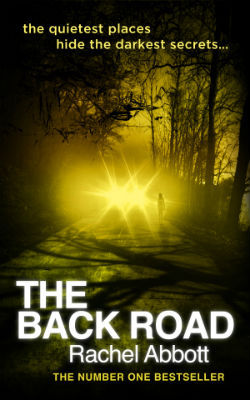
The Back Road - Rachel Abbott


I was impressed by Rachel Abbott's addictive debut novel, Only the Innocent - you can read my review here - I found it a genuine page-turner, hard to put down, and I wrote at the time that I was excited to see what she would create next. Having heard that she had completed her second novel, The Back Road, I was therefore very keen to get between the pages and discover the secrets contained within.


The Back Road introduces us to half-sisters Ellie Saunders and Leo Harris. Ellie is living with her family in what was the sisters’ childhood home, now fully converted from the place it once was. We learn that there were dark times in the sisters’ pasts, and returning to the village of Little Melham is a major step for life coach Leo considering the deep unhappiness she recalls from her time there when she was younger; the girls share starkly conflicting feelings as to the role their father played in their lives.

Then the author introduces us to a wider cast of characters who come together for a dinner party at Ellie’s home. Prior to this though, there is an intriguing opening to the novel and we learn of a desperate flight be a fourteen-year-old local girl Abbie and know that someone is in pursuit. She is knocked down and left for dead in a hit and run incident, which happens on the significant back road in the town. Ellie is a nurse and was called to tend to the girl when she arrived in hospital.

The scene is very nicely set-up for us to observe and get to know the dinner guests as they interact with each other, and various aspects of their behaviour and personalities began to arouse my suspicions. Several of their stories don’t necessarily seem to ring true and I started to question who amongst them I could trust; what secrets are hidden behind the beautiful façade of this home and village?

‘The mood around the table was strange. To Leo it seemed as if everyone was acting a part that was different from any version of themselves she had ever seen. As an observer of this intriguing phenomenon she had the best seat in the house…’

There is a welcome return for the character of Tom Douglas who featured in Only the Innocent as a police detective. This time he appears in a civilian capacity as one of the neighbours who attends the dinner party. We catch up with him having moved to be nearer to his daughter, and it’s interesting to see him in this different role. 

Rachel Abbott has created a clever scenario and written an intriguing crime story here, incorporating twists as the tale progresses, and created some highly suspicious characters; she does a good job of making them open to question by the reader, with the secrets and rumours that abound. She is skilled at showing insight into the motives and psychology behind her chracters’ behaviour, and had me thinking about each of them as I read; what were their motives, their secrets, their relationships, who was concealing what here, I wondered, as I tried to decipher whodunit from amongst the lies, looking for the hints and gradual revelations. A clever psychological crime and mystery novel. 


Thanks to the author for kindly providing an early ebook copy of this novel to read and give an honest review.

You can follow the author on twitter @_RachelAbbott  and visit her website here.