Book Reviews

‘The best moments in reading are when you come across something - a thought, a feeling, a way of looking at things - which you had thought special and particular to you. And now, here it is, set down by someone else, a person you have never met, someone even who is long dead. And it is as if a hand has come out, and taken yours.’ Alan Bennett

“Many a book is like a key to unknown chambers within the castle of one’s own self.” ― Franz Kafka

Showing posts with label Scotland. Show all posts

Thursday, 5 March 2015

The Leipzig Affair - Fiona Rintoul


Synopsis

The year is 1985. East Germany is in the grip of communism. Magda, a brilliant but disillusioned young linguist, is desperate to flee to the West. When a black market deal brings her into contact with Robert, a young Scot studying at Leipzig University, she sees a way to realise her escape plans. But as Robert falls in love with her, he stumbles into a complex world of shifting half-truths – one that will undo them both.
Many years later, long after the Berlin Wall has been torn down, Robert returns to Leipzig in search of answers. Can he track down the elusive Magda?
And will the past give up its secrets?


Review

'It's another world over there.'

I loved this novel, it had me gripped all the way through. The setting and time period is one that I find fascinating having studied German, and I do enjoy/find intriguing a lot of fiction that involves events surrounding the Berlin Wall and the former East Germany. Fiona Rintoul has created two captivating main characters in Magda and Robert. She creates tension and suspense, and really conveys the atmosphere and secrecy of the times. Magda is studying interpreting in Leipzig, East Germany, in 1985, but is disillusioned with life and politics there, and wants to leave and get to the West. Robert is a student at St Andrews, and events see him ending up in Leipzig and meeting Magda, getting to know some of her friends, and becoming involved in her complicated world.


The story is told in alternating chapters with Robert's story recounted in the first person, and Magda's told in the second person. I thought these points of view worked successfully here. I felt Robert's character was fleshed out particularly well; his personal weaknesses and the moments from his business career added depth and dimension to the story. The novel concentrates not only on those days back in 1985, but also takes us to the present, with the Berlin Wall having fallen and Robert finally revisiting Leipzig, and I was excited and nervous to travel with him there once more and discover what, and who, he would find there this time.

I felt absorbed in the tale as I read and I also felt that the author knew her stuff regarding the background and setting of her novel, and that she wrote in a balanced way about this period of Germany's history. Though Magda and many others like her felt determined, desperate to flee to the West from the GDR, and were very disillusioned by the country, the Stasi surveillance, the way some people were treated such as the tragedy that befalls Magda's brother, nevertheless many people also looked back at their former country with a certain amount of regret once it was gone. This is captured particularly well in a conversation between Magda and her father, after the regime has come to an end:

'"Personally, I think we've paid a very heavy price to have bananas in the shops and shiny new cars on every street corner. I look around me and I see young people with no jobs and no hope. I see homeless people. Did you ever see a homeless person in our Republic?..."
He's jutting his chin out again. It's odd. You agree with much of what he says. It's true that things are not so wonderful in the the new Germany. The West Germans are arrogant. They think they know it all. People like you have become strangers in their own country. Everything from the past has been swept away, whether it was good or bad, without anyone asking if that's what the people want.'

It's sad to read that 'all the dreams from 1989 of building a better kind of GDR, creating a new kind of socialism, are long forgotten.' Fiona Rintoul gives us a picture of the hope and then the reality that many felt hit them after reunification.

I thought The Leipzig Affair was a really enjoyable, gripping read, well-written throughout. I'm really glad I read it and I will definitely be watching out for more works by this author.

Review copy received via amazon vine

Thursday, 27 February 2014

Book Beginnings - Gillespie and I - Jane Harris


Gilion at Rose City Reader hosts Book Beginnings on Fridays - The idea is 'to share the first sentence (or so) of the book you are reading, along with your initial thoughts about the sentence, impressions of the book, or anything else the opener inspires.' Hash tag #BookBeginnings for twitter and a master linky list on the host's blog.

I haven't managed to join in for a little while, and I'm not sure what week number I got to so I'll leave that out, but I do love this meme, and it's nice to be taking part again.


I'm reading Gillespie and I by Jane Harris, published by Faber and Faber.


Isn't the cover beautiful? 

(This is the UK paperback edition. The hardback also has a lovely cover design, different to this but incorporating some of the same elements.)


Here's the beginning...


Preface
Tuesday, 11 April 1933
London

It would appear that I am to be the first to write a book on Gillespie. Who, if not me, was dealt that hand? Indeed, one might say, who else is left to tell the tale? Ned Gillespie: artist, innovator, and forgotten genius; my dear friend and soul mate. I first became acquainted with Gillespie in the spring of 1888 and during the course of several years thereafter we were connected through the most intimate of friendships.

~~~~~

Have you read this novel? What did you think of it? 

I am so glad to finally be reading this book. In fact I've been reading it for the past few days and I'm very close to the end now - it's a brilliant read. The characters have me fascinated, none more so than Harriet herself, who is the narrator in the above excerpt from the start of the novel. 

I loved The Observations, the first novel by this writer, in fact that's one of my favourite books. I intended to read this second novel a long time before now. I'm not sure what stopped me, a combination of things, but it's an excellent book and here I am finally near to finishing it, hooray!

Here's the author's website if you're interested in finding out more.

Have a great weekend whatever you are reading!

~~~~~

About the book...

As she sits in her Bloomsbury home, with her two birds for company, elderly Harriet Baxter sets out to relate the story of her acquaintance, nearly four decades previously, with Ned Gillespie, a talented artist who never achieved the fame that she maintains he deserved.

Back in 1888, the young, art-loving Harriet arrives in Glasgow at the time of the International Exhibition. After a chance encounter, she befriends the Gillespie family and soon becomes a fixture in all of their lives. But when tragedy strikes - leading to a notorious criminal trial - the promise and certainties of this world all too rapidly disintegrate into mystery and deception.

Featuring a memorable cast of characters, infused with atmosphere and period detail, and shot through with wicked humour, Gillespie and I is a powerful and haunting second novel from one of today’s most striking new voices.


Thursday, 7 November 2013

Emotional Geology - Linda Gillard


'I move to prove to myself that I am not drugged, that I have willpower and can use it. See me - I can move. I exist. I am me. 
The first battle of the day is fought and won.'


Emotional Geology was Linda Gillard's debut novel. She has since written five more novels, most of which I have read - you'll find reviews of some of them here on my blog. I was drawn to reading this one in particular, and yet also hesitant about it, because it deals with mental health. I'm so glad I've read it now. It's a beautiful, sad, evocative and romantic tale that felt very real and honest.

We meet 47 year-old textile artist Rose Leonard living on the island of North Uist in the Outer Hebrides, in a small community, wrapped up in her work, relishing the quietness and peace of her surroundings, trying to escape, or at least find some acceptance of, the traumatic events in her past that still dominate her thoughts. Her main human contact is occasional encounters with her nearest neighbour Shona and her family, and corresponding by letter with her own daughter, Megan. One day Rose meets Shona's brother Calum, a teacher and poet who is younger than her and is blighted by his own scars from the past. 

Linda Gillard captures relationships believably and with Rose and Calum she has depicted an attraction between two very damaged souls; their respective paths in life and love so far have been neither smooth nor easy, but together they make for a passionate, creative couple – though it won’t be an easy journey for them. I felt totally immersed in their story as I read. Love, relationships and desire are themes at the heart of this story but it should by no means be filed away simply under ‘romantic’ fiction as there is so much more to it than that, in particular the importance of place and the search for sanity.

The author conveys the passion that Rose has for her craft, the freedom of expression she finds in her artwork, an outlet for both her inner joys and demons. In Rose she portrays the manic, frenzied highs and desperate, crippling lows of bipolar depression. A mental illness can place enormous strain on relationships and the challenges of that are dealt with skillfully and honestly here. I felt Rose's anguish and reluctance to move forwards into a new relationship, to allow herself to risk being hurt, or to risk trusting Calum, when she was so haunted by her previous partner Gavin; he was still such a presence for her and dominates her thoughts, as Megan tells Calum, ‘She may be physically distant from him and distant in time…But she’s still living with him. He’s in her thoughts, inside her head…’

But I could feel that she sensed there was a chance for her to know new happiness, if she was brave enough, and strong enough, to take it. In Calum we have a sensitive, caring and handsome man, a mature, damaged hero if you like, and Rose is a mature lady, ‘too young to be widowed and too old to be looking for a mate. I occupy that no man’s land – no woman’s land – between youth and old age.’ This is a theme that this author often considers; a lead female character in her forties or fifties, not in the early stages of her life but by no means near the end either, and what that is like. Rose’s relationship with daughter Megan is also evidently difficult and as the story unfolds we discover some of the reasons why. I felt for the position Megan was in, and how difficult it could be sometimes, even if I didn't agree with all of her behaviour.

Even at some of the darkest times, though, and in the most difficult situations there are still wonderful moments of humour, and the author has a gift for this in her writing.

The setting plays a big role in the novel; it is a place of escape, a bleak yet stunning landscape as backdrop to the growth of this new love. The title of the novel is a clever choice. Rose has chosen to live on 'female' North Uist for a reason; even the structure and feel of the land gives her more peace than a 'male', more mountainous landscape such as that on Skye – ‘masculine country of hard edges and angles…male and exciting’ - would:

‘The landscape here on North Uist is female: pale, undulating, yielding. There are no cliffs or mountains, no wide rivers, no great heights or depths, not even many trees. There are sparkling lochans like jewels, wild flowers scattered on the dunes like bright beads, burns that chatter and gurgle like Shona’s children. I feel safe here, even in the teeth of a gale. To be sure, the wind and sea seem male, gnawing away at the land, occasionally beating her into submission, but they come and they go, like the fishermen.’

I could picture some of the scenes in the novel and imagine the places as they are evoked so memorably. I would love to visit this place – Uist - one day and compare it to what I have seen of Skye. 

As well as artistry and expression with textiles and words, the novel explores the pursuit of climbing, and what drives some of those who venture up some of the world’s most challenging climbs. Though I have a passion for hillwalking myself, I wouldn’t describe myself as a climber and it was interesting to read about characters for whom the challenge and risk of climbing is so much a part of their lives, a need they must fulfill.


I found this a moving and at times painful read; parts of it, in particular those dealing with Rose’s health, really touched me. I thought Rose’s illness was portrayed honestly and the impact of it on both her and those around her was believable. These characters intrigued me and have stayed in my mind. I enjoyed the inventive narrative structure incorporating first person, third person, letters and poetry into the storytelling. At times the prose was blunt and crisp; just right for conveying some of the very raw, stark emotions. I liked the symbolism in the story and how trees were important at the very start and again at the very end. 

A heartfelt and unforgettable book. 

Source - author review copy
Previously published by Transita and now self-published Available as an ebook here (paperback currently out of print)
Author website | Author facebook page
Views of other bloggers - Girl Vs Bookshelf  | Dizzy C's Little Book Blog | Angieville

Wednesday, 16 October 2013

A trip to the Highlands and some good reads!

I've not shared a new blog post for a few days, as we've been away in the Highlands of Scotland. I'm gradually catching up with things, including the blog, and hoping to get around  to reading and commenting on blog posts soon. 

Here are a few photos from the trip. The scenery is quite breathtaking, the mountains seem to stretch on as far as the eye can see in places, the colours of the lochs and the nature all around are just incredibly beautiful. 

Glen Affric

Some fabulous rainbows...

Rainbow on Skye

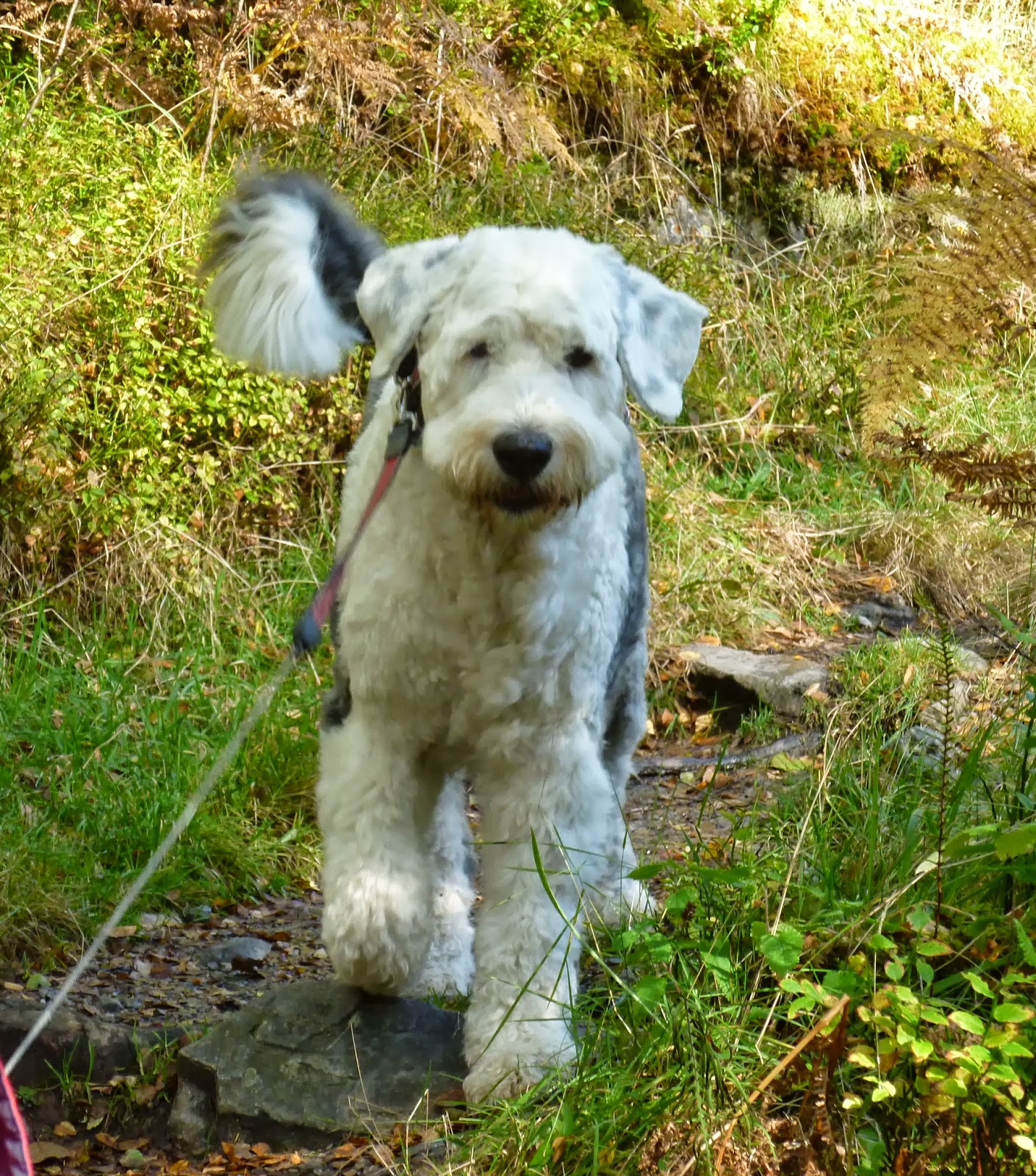
...and a four-legged friend always part of the action!


We visited a couple of lovely independent bookshops, new and secondhand, and I belatedly got a Books Are My Bag shopping bag, at the Nairn Bookshop. 

Nairn
Kingussie

The natives were friendly...


and we even saw some of these, just spectacular...


I've been reading too, some great stories:


Snow White Must Die by Nele Neuhaus

The Cry by Helen Fitzgerald

Trust Your Eyes by Linwood Barclay

The Husband's Secret by Liane Moriarty

Emotional Geology by Linda Gillard 
(reading this one at the moment, keeping my thoughts about Scotland alive!)


Lots of reviews to catch up on. Back soon!

Tuesday, 30 July 2013

Secrets of the Sea House - Elisabeth Gifford - Extract & Giveaway


Book news: 

Secrets of the Sea House by Elisabeth Gifford, is published by Corvus, an imprint of Atlantic Books, on 1st August 2013. I love the sound of this story and hope to review it soon here on my blog. In the meantime, you can find out more about it and the author, read the prologue and the first chapter, and also enter the giveaway to win one of five copies.


About the book:

Scotland, 1860. Reverend Alexander Ferguson, naïve and newly-ordained, takes up his new parish, a poor, isolated patch on the Hebridean island of Harris. His time on the island will irrevocably change the course of his life, but the white house on the edge of the dunes keeps its silence long after Alexander departs.
It will be more than a century before the Sea House reluctantly gives up its secrets. Ruth and Michael buy the grand but dilapidated building and begin to turn it into a home for the family they hope to have. Their dreams are marred by a shocking discovery. The tiny bones of a baby are buried beneath the house; the child's fragile legs are fused together - a mermaid child. Who buried the bones? And why? Ruth needs to solve the mystery of her new home - but the answers to her questions may lie in her own past.
Based on a real nineteenth-century letter to The Times in which a Scottish clergyman claimed to have seen a mermaid, Secrets of the Sea House is an epic, sweeping tale of loss and love, hope and redemption, and how we heal ourselves with the stories we tell.

About the author:
Elisabeth Gifford grew up in a vicarage in the industrial Midlands. She studied French literature and world religions at Leeds University. She has written articles for The Times and The Independent and has a Diploma in Creative Writing from Oxford OUDCE and an MA in Creative Writing from Royal Holloway College. She is married with three children. They live in Kingston on Thames but spend as much time as possible in the Hebrides.


Here's a stunning image taken by the author in the Hebrides...


Harris

Extract from Secrets of the Sea House...


Prologue

My grandmother’s grandmother was a seal woman. She cast off her seal skin, fell in love with a fisherman, had his child, and then she left them. Sooner or later, seal people always go back to the sea.
At least, that’s the story that Mum used to tell me.
‘But is it true?’ I wanted to know.
‘It’s as true as you and me, Ruthie,’ she said. ‘There’re plenty of 
people up in the islands that come from the seal people.’

And later I used to think, Of course, that’s what must have happened.That’s why she left me. She couldn’t resist going back to the water, because she was a Selkie.
For a long time, I liked to think that. Because it meant she might come back one day, and then I could go home. 


Part One

Chapter One 


Ruth, 1992

I don’t think I had ever felt so piled with gifts as I did that first night we slept in the Sea House, or so excited. I was ready to get up and carry on with the painting there and then. It was completely dark, no slur of city light. I pressed the little light on the alarm.Two a.m.
I curled up closer to Michael’s long back. He was so solid in the darkness; his presence filled the room like a comfort.When I first met Michael, I thought he was too tall and elongated, a species I didn’t recognise.Then I realised that he was just how he should be, a sapling in a wood, his pale brown hair the colour of winter leaves.And right now, he was exhausted, completely dead to the world.
It had taken months of back-breaking and filthy work to get the old place scraped down to a blank canvas, and then we’d had to start the long haul of repairs ready for us to move in.The truth was that our bedroom and the half-finished kitchen were still the only inhabitable bits, but you could see from the proportions of the Georgian rooms with their elegant windows and carved fireplaces that one day the house was going to be beautiful.
I turned over again, far too awake for two in the morning, and also incredibly thirsty, probably because of the dubious cava from the Tarbert Co-op. I didn’t want to get a drink from the bedroom sink: we’d just cleared a dead bird from the tank feeding the upstairs taps.
It was icy when I slid outside the bedcovers.The fire in the bed-room grate had gone out. I went down the stairs as quietly as I could, feeling with my hands along the cold plaster where it was too dark to see.
Down in the kitchen, I filled a mug from the tap, and drank the water as I stared out at the dark shapes of the hills.A glassy moon clear in the black sky.The room was flooded with monochrome shadows, but then the kitchen looked at its best in the dark.You could almost imagine that the humped shape in the corner was a new Aga rather than a builder’s old trestle covered with a cloth, a tiny Belling hot- plate and washing-up bowl on top.
Next to the window, the moonlight showed the pale squares of my noticeboard with its To Do lists for every room; snippets of cloth and paint cards; pictures of ideal rooms torn from magazines; a collage of how the Sea House was going to be – one day. I loved sitting at the rickety kitchen table updating the lists, adding and crossing off, enjoying the delicious feeling of our forever home finally rising up from the rather disgusting ruin we’d bought in the dead of winter.
I’d first seen the house by torchlight, running the pale light over the boarded-up windows, the walls cracked and streaked with green damp.We had to force the back door to get in.The air was thick with vegetal rot. Piles of filthy fleeces stacked up in the wreck of a kitchen. Crumbling dirt and debris everywhere.The air had felt so cold it sucked the heat from my face and hands.
I was ready to turn round and go back to London.
‘But don’t look at the mess,’ Michael said. ‘Think of it freshly painted, curtains at the kitchen windows, a nice big pine table here.’ 
Now, with the outside more or less weatherproofed, the rats evicted and the holes in the roof remedied, the debris swept away, and after hours and hours of plastering and painting, we were finally in – and it was possible to imagine that one day, instead of a chilly building site, the Sea House would feel like a real home.
And always the next thought, the one that seemed impossible. When the house was completely ready, we’d come in through the front door, and I’d be holding a small, warm weight, a little sleeping face in a nest of soft shawls. Our child.
I avoided glancing down to the bottom of the noticeboard and the scruffy wad of bills still to be paid. Felt the niggle of worry stir in my stomach.
I tipped the mug up and put it on the draining board – carefully, as the sink was a bit loose from the wall, propped up with some wood offcuts.The flagstones were freezing and starting to make my feet hurt. My shoulders felt pinched by the cold.
There was hardly any moonlight as I crossed the hall to go back upstairs.The new floorboards felt unpleasantly gritty under my bare feet and a freezing draught was coming up from the missing skirting board, bringing with it a clayey odour. I shivered and made for a pool of moonlight on the lower banisters. I put my hand out to take the newel post and felt the cold of the gloss paint under my palm.
That’s when I saw it: a quick blur of movement like a tiny wing caught from the corner of my eye. I saw a hand descending on the newel post just after mine.
I froze. A sudden, painful pricking of blood in my feet, the smell of clay sharp in my nostrils, every instinct primed to get out of there. She was so close, so palpably present, I thought she would appear in front of me. I couldn’t breathe. My heart was gabbling so hard I thought it was going to give out.
And then she was gone.The air relaxed.
I ran up those stairs, the door to our room half ajar just as I had left it. I got back into bed with a thump and lay close to Michael. He murmured but didn’t wake.
I stared into the dark.What on earth had just happened? Some delay in the messages from my eye to my brain. Some silly trick of the mind half roused from sleep had sent me into a stupid panic. Eventually my heart slowed to normal and I’d almost talked myself down, was almost drifting off when I woke up once more, very alert. I opened my eyes onto the darkness.Then why had it felt so intensely real, as if someone else was there in the hallway, standing beside me so closely that for a moment I wasn’t sure who I was?
The fear was beginning to seep back in. I felt sick from fatigue, but there was nothing I could do; I stayed alert and awake, listening out to the minute sounds of a silent house, all my senses still primed.
I could hear the waves breaking along the shore like soft breaths. I got up and wrapped a blanket from the chair round my shoulders, went to the window and lifted the wax blind.The moon was completely round in the blackness.There were bright lines of its phosphorescence along the waves, continuously moving through the darkness and then disappearing.
I watched them for a while. After that I felt calmer. Eventually, I got some sleep.

When Michael came in with two mugs of coffee next morning, the sun was already strong through the blinds.
‘The wood’s being delivered this morning,’ he said, picking out a T-shirt and giving it a sniff. He worked his arms into it.‘We might have a floor in the sea room today.’
He sat on the bed, making the mattress bounce, and pulled on his grubby jeans from the day before. I had to cradle my coffee so that it didn’t spill on the new duvet. It had an oily bitter smell. I wondered if the jar of Nescafé had gone stale. I put the coffee to one side on the orange box that was covered in a new tea towel for elegance.
‘Donny’s coming to help pull up the rest of the old boards. Although we’re going to dig a channel in the earth underneath to lay a cable first.’
‘I’ll come down and help,’ I said.
‘I thought you were going to finish your drawings.’
He leaned over and bashed my chin with a quick kiss. His long,

slim arms looked different, the muscles and veins more prominent. He’d worked so hard to get us out of the caravan. He’d hated the little bed that didn’t let him stretch out, but I’d got to quite like living in the shelter of the dunes, right next to the deserted beaches and the wide Atlantic rollers that towered up like molten glass in the blue winter air. I was glad that the Sea House was almost as close to the water, just the other side of the dunes, where the green machair broke into sandy waves of undulating silver marram grass.And then the beginning of the wide, flat beaches.
Michael stood up, stretched his long torso and combed his hands through his curly hair. I think the thing that made me fall in love with Michael was the way he stooped to listen to me because he was so tall, as if he really wanted to hear what I was saying; and he was so kind and willowy, his mop of wiry, fair hair like a medieval angel in a picture. He pulled on a jumper, then his grimy overalls. He smiled, slapped his legs, ready to get started.
‘So, Donny’ll be here in half an hour.’
‘I’m getting up. It’s just, I didn’t sleep well.’
‘Yeah, I know. I’m constantly thinking about the next thing to

do, seeing us open, the first guests rolling up. And I still can’t believe we live in this house, in this fantastic place.’
I could hear him whistling as he went downstairs.
I got the fire going again in the grate and had a horrible cold wash in the sink in the corner of the bedroom. I pulled on my jeans and a flannel shirt, feeling guilty that it was Michael who was doing all the back-breaking work, while I got to sit in the only good room and draw lizards.The book was on reptile neurology and I’d just started the last chapter:‘The Brain and Nervous System of Podarcis erhardii, commonly known as Erhard’s Wall Lizard’. Michael had got used to sleeping in a room with the dry aquarium and its lizard family, and the faint acrid smell of waxy chrysalises that collected at the bottom of the tank.
I lifted the insulation wadding and looked through the side of the lizard tank to see how they were getting on; immediately, a flick of a tail and a scuttle; the two lizards flashed into a different position and then froze.The thing about lizards is you can never tame them.They have a very small, very ancient brain that operates on one principle: survival.They spend their whole lives on high alert, listening out for danger, scanning their surroundings with their lizard eyes, their toe pads picking up every vibration in the earth, ready to send back one message to the brain cortex: flee, flee now.They don’t consider, or think; they simply reach a certain overload in feedback criteria and then run.They are sleek little bundles of vigilant self-preservation with an evolutionary strategy so effective, you can find a lizard brain tucked inside every developed species.
I pushed back the sleeve of my jumper and carefully lowered my hand into the glass tank.There was a flicker and they both scuttled to the other end in a flurry of sand and tiny sideways straggle legs. But there was nowhere else for them to go. I slowly moved my hand towards the corner; another quick scuffle, and my hand closed round one of them. I could feel the little whip of muscle working inside my palm and the scratching of its back legs.
I held the chloroform bottle against my chest with the top of my arm and unscrewed the top.Then I covered the opening with a wad of cotton wool and tipped it over with my free hand. I held the damp cotton over the struggling lizard.Waited till it stopped. I put the lid back on the bottle, and sat down at the desk. The lizard was lying across the piece of card, its arms and legs something between a minute plucked chicken and a cartoon frog in its anthropomorphicpage13image32952 arms-up pose. I picked up the scalpel and started to slit along the belly skin, ready to map out the nerves.
I realised that the banging and splintering from downstairs had stopped. I have an amazing ability to sit through noise and not notice it once I begin to work, but the sudden silence was unsettling. Not even the sound of digging. Something’s come up, I thought, and went downstairs with my arms folded. I only hoped it wasn’t more problems. Michael’s father had lent us enough to get the manse ready to take our first bed and breakfasters, but we needed to be open as soon as possible if we were to keep up the payments.
I made my way down through the hallway, crossing my arms across my chest against the chill. Down in the sea room, every one of the square sash windows was filled with views of the Atlantic so that the place always felt more sea than room. Michael and Donny were standing thigh deep among the floor joists, looking at something. When Michael saw me coming in he didn’t look pleased.
‘What is it?’ I asked. ‘Just tell me the worst. Is it dry rot?’
Donny looked upset and serious. Michael was white under his summer tan and the grime from ripping up the old wood. It was freezing in there.There was a fusty smell of rot and damp.
‘I don’t want you to look,’ he said. ‘You won’t like it.’
‘What is it? Oh God, not another rat.’
I walked round the edge of the walls where there were still some 
floorboards down and then lowered myself into the floor space between the joists.The floor was damp and sandy and littered with dirt and debris. Michael and Donny were standing one each side of a small dark-brown box, or rather a little metal trunk that was rusted away in places. It had evidently just been dug up from the sandy soil.
The lid was open.
I squeezed next to Michael so that he had to hold on to the joist behind him.
‘Don’t,’ he said.
I squatted down and looked inside.The earth smelled very sour and close there. I could see a jumble of tiny bones mixed in with a nest of disintegrating woollen material.There was some kind of symmetry to them; a tiny round skull, like a rabbit or a cat.The bones had a yellowish tinge, scoured clean by beetles and other organisms that had got into the trunk as it rusted, probably over many years. I wondered why someone had buried a cat under the house.Then I tipped my head sideways, frowned.
This was no family pet or small animal. No, this was the skull of a human baby, but everything so tiny that it must have been born either very underweight, or premature. My eyes traced along the arm bone and then down the bones of one of the legs.
Something was wrong.Where was the other leg? I shuffled closer, and noted the strange thickness of the single leg bone, the long central indentation along its length, and then I realised that it wasn’t so much that any of the bones were missing but that both legs had been fused into one solid mass, the feet barely there and oddly splayed out like tiny appendages.
My heart missed a beat. I couldn’t believe what I was looking at. 


~~~~~

Giveaway!

If that opening chapter has enticed you to want to read on, then, thanks to the publisher, there are 5 copies to be won! To enter the giveaway to win a copy of Secrets of the Sea House please leave a comment below about your thoughts on the opening passage, or on the sea, mermaids, Scotland in general, or just simply let me know that you want to enter the giveaway :) 

UK based entrants only please. 


*****THIS GIVEAWAY IS NOW CLOSED. THANK YOU FOR YOUR INTEREST. WINNERS TO  BE SELECTED AND ANNOUNCED IN A SEPARATE POST.*****


 Winners will be chosen at random. Please get back to me within 48 hours of my contacting you, if you have been chosen. Otherwise a new winner, or winners, will be drawn.

Good luck!

Visit the author's website here. 

~~~~~

Extract and image featured here by permission of the publisher. 

Sunday, 18 November 2012

Untying the Knot - Linda Gillard


'We set each other free, free to prove we could live without each other.'

Untying the Knot is a beautiful, character-driven novel, depicting the devastating consequences of post-traumatic stress disorder, resulting from a life spent in war zones, making bombs safe. Magnus has been severely affected by his former role, traumatised by flashbacks and scarred by horrendous memories, and his now ex-wife Fay has borne the brunt of his erratic behaviour until one day she could take no more, and she finally left him and moved on.

Magnus now has a new partner, Nina, who lives with him in the home that he previously shared with Fay. Tullibardine ‘Tully’ Tower, a place that takes on such an important role in the novel that it is like a character in itself, a formidable old 16th-century ruin, that Magnus insisted on taking on, restoring, against all protests from Fay that it was too much. Daughter Emily remained with her father, and has a new love, Rick, and there is talk of marriage. 

This is another beautifully written, emotional novel with depth in terms of characterisation and plot. I will be honest and admit I have genuinely loved and enjoyed reading every book that I have read by this author, but this one is probably my favourite. I am keen to read it again. It was one of the very first books I read on my Kindle and it was certainly a fine one to being with! I was gripped by this story and felt drawn into the characters' lives. 

I loved the way the characters were revealed in the opening chapter and thought this was very cleverly written. Linda Gillard has done her research on the topics incorporated into the story here, and has handled them sensitively but always with realism. 

The idea of memory is strong in this novel. For Magnus, memories are rife with 'demons.' Fay meanwhile deals with the memories of others, creating textiles for people, 'picture-histories':

'I spend my working life preserving other people's memories, trying to capture them in a form of textile 'still life', but I spent much of my marriage watching the man I loved being tortured - all but destroyed - by the demons of memory.'

Another strong emotion felt by Fay is fear: 'I was scared...Scared of how much I loved Magnus; how much my body wanted him; how much he wanted me; how I might fail him; how he might fail me;...I was scared of how ill Magnus was and how ill he'd always be...' 

I enjoyed discovering aspects of the old tower and the history of the place which were described within the book. 

There was also surprise and humour alongside the sadness and the more serious elements of the storyline.

This author seems to grasp how to write convincingly about love and emotion, the highs and lows, the intense passion and the deep pain, none more intense than that shared between Magnus and Fay here.

They are rounded characters who are flawed, scarred, confused, vulnerable and therefore so very human, so believable, and so compelling for the reader. They may be able to live without each other, but have they ever stopped loving each other?

The ending is thrilling and brilliant!

I think the cover of this one is beautiful. 

A marvellous read. 


Available to buy as an e-book for Kindle from Amazon now.


I bought this book. 


You can visit the author's website here and read more about the inspiration for this novel and the themes involved.