Book Reviews

‘The best moments in reading are when you come across something - a thought, a feeling, a way of looking at things - which you had thought special and particular to you. And now, here it is, set down by someone else, a person you have never met, someone even who is long dead. And it is as if a hand has come out, and taken yours.’ Alan Bennett

“Many a book is like a key to unknown chambers within the castle of one’s own self.” ― Franz Kafka

Showing posts with label newbooks. Show all posts

Monday, 16 March 2015

My book blog is in Newbooks Magazine!


I've really looked forward to the moment each time a new edition of Newbooks Magazine  - for readers and reading groups - arrives in the post over the past few years since I have been subscribing to it, and I have had the chance to read and review some lovely books for them too, as well as attend a brilliant 'Readers Day' that they put on. 

If you haven't given it a read as yet, I'd definitely recommend it, it's a great way to find out about new books, I've discovered quite a few debut authors over the years through reading about them in the magazine, and there's also lots of book reviews and other bookish articles of interest, as well as some extracts from new books. It has a compact new look and the presentation looks better than ever too. I love having a magazine all about books! Last year, Newbooks teamed up with nudge books which offers a great selection of online content about books, including reviews and news. This has enabled Newbooks to continue offering their lovely paper magazine in tandem with all the online content on the nudge website  Do have a look at both if you can! 

Warning: beware the inevitable numerous additions to the to be read pile though....!

So, it was an honour for me when I was invited to feature in the magazine, spotlighting this very blog The Little Reader Library

The new issue nb84 Spring 2015 is just out and I was really excited and proud and happy  and nervous to be featured. 

Thank you very much to Guy Pringle at newbooks for the opportunity and thank you to Claire King for permission to feature parts of an interview with her. 

Josie at the lovely JaffaReadsToo book blog was featured in the previous issue, do check out her blog too. 


Monday, 16 December 2013

The Undertaking - Audrey Magee


In the midst of World War II, Peter Faber and Katherina Spinell embark on an usual marriage – they haven’t even met. Peter takes this step to get ‘honeymoon’ leave from the Eastern front, and he travels to Berlin and meets his wife and her family for the first time. For Katherina, it offers a war pension should he die. Before the war a schoolteacher in Darmstadt, now he is fighting in Russia, for his homeland Germany. Despite the unconventional manner of their union, the pair do find they like and indeed come to love one another, making it difficult for them both when Peter has to return to Russia.

The narration moves between Peter’s horrendous time in Russia as his division moves towards Stalingrad, and Katherina’s life in Berlin, where she enjoys a relatively comfortable existence for a time – this is thanks to her father’s close acquaintance with the powerful Nazi Dr. Weinart, who he almost slavishly complies with, even to the point of not defending his own war-damaged son Johannes in front of him. When the war starts to go against Germany, though, both of them find themselves still apart, and in dire circumstances.

The author writes with brutal honesty of the appalling conditions the soldiers endure, and conveys the different views amongst them about what they are actually fighting for, so that as a reader we can conceivably sympathise with Peter despite the outrage we feel at the regime he was fighting to protect. Audrey Magee also convincingly portrays the turbulent change in fortunes for Katherina and her family.

Throughout the novel, much of the narrative is written as dialogue; I quickly got used to this style and thought it worked very well here; the author lets the characters’ thoughts and decisions speak for themselves, directly, rendering their emotions and experiences vividly to the reader.


The Undertaking is a stark, intelligent and powerful debut novel that confronts harsh realities and depicts two ordinary people complicit in terrible actions.  I was impressed by it and I’d love to read more by this author. There is plenty here for reading groups to debate and get their teeth into – morality, greed, war, damage, and love.


Published by Atlantic Books - 6th February 2014
Originally reviewed for Newbooks magazine

Tuesday, 25 June 2013

Stolen - Rebecca Muddiman


‘How had this become her life? It wasn’t even a life. She felt like a ghost.’

Abby Henshaw is on her way to visit a friend after a doctor’s appointment with her eight-month-old baby daughter, Beth. The journey she makes will change her life forever. Suffering a horrendous assault and abandoned at the roadside in a remote spot in the country, Abby faces not only the after effects of the brutal attack, but also comes to a terrifying realisation about Beth – she is gone, stolen. DI Michael Gardner investigates the case and as he looks into Abby’s life and those closest to her, he starts to uncover huge secrets amongst them, and he also finds himself forming a bond with Abby and unable to let the case go even when any leads seem to have gone cold.

Rebecca Muddiman successfully portrays how Abby’s life is utterly destroyed by Beth’s disappearance, and how she is tormented by the secrets she kept and the decisions she made. She is reduced to scouring public places in the vain hope of ever seeing Beth again, and when there is new hope she depicts the struggle Abby has to convince those around her to believe her and not let this lead slip away.

This powerful debut is a compelling, page-turner of a crime novel from a talented new author. The story slowly builds in tension, I was a bit keen for it move slightly quicker at times in the middle, but when the revelations come towards the end, I felt they were powerful and shocking. The chapters are very short and keep the story ticking along at a good pace. The plot is always central to this novel – the reader questions what the outcome will be throughout – but the novel is also very much character driven, as we get a strong insight into Abby’s drastically altered life and into DI Gardner’s rather empty life and his mindset as he continues to doggedly pursue this case for Abby, despite it having been shelved and seemingly without any hopes of resolution, whilst under pressure to solve his other cases. 

I was really keen to discover the ending to this story and learn if what I had suspected was true; there are clues for us but the whole truth when it comes is more shocking than I had thought. I look forward to reading more from this author. 


Published by Moth Publishing and Winner of the Northern Crime Competition 2012

I originally reviewed this book for Newbooks magazine.

You can find the author on twitter @RebeccaMuddiman and visit her blog here.

Thursday, 16 May 2013

Fear - Stefan Zweig


Translated from the German by Anthea Bell

'...her fear was waiting, impatient to take her in its grasp...'

This novella of less than a hundred pages was written almost a century ago by Stefan Zweig yet the themes of love and affairs, the search for excitement and passion, the guilt and the fear of discovery of infidelities are eternal ones that are just as relevant today. As the narrative commences, we meet Irene Wagner as she leaves the home of her lover, a young pianist, to return to her easy, comfortable bourgeois life, home and family. However, as she endeavours to overcome the fear that hits her upon leaving his arms, she is horrified to encounter his former mistress, who proceeds to blackmail her.

Zweig makes such accurate observations about human behaviour and relationships, and in particular here, such striking insights into a woman’s thoughts and emotions. It’s a beautifully written, intelligent and deeply insightful study of a woman seeking something beyond her bourgeois married life, and this English translation is excellent and a pleasure to read. I'm so glad that Zweig's works are available to a wider audience now. 


Published by Pushkin Press

originally reviewed for newbooks magazine

Monday, 14 January 2013

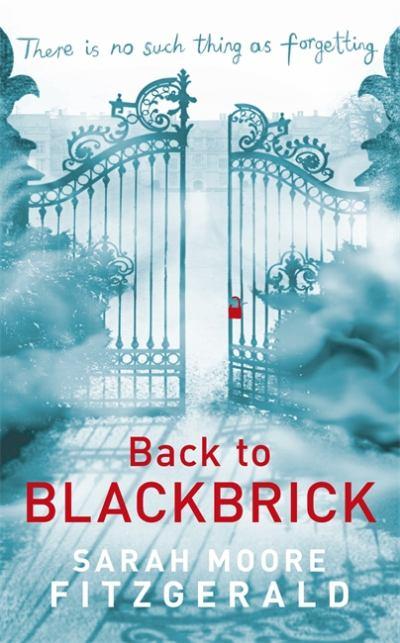
Back to Blackbrick - Sarah Moore Fitzgerald


Cosmo lives with his Grandparents, his mother having left to go to Australia for work. His elder brother Brian died. Cosmo’s Granddad is suffering from Alzheimer’s. Cosmo does what he can to try and help his Granddad continue living at home as he couldn’t bear to be without him – they have always been close - but after a visit from social services, it seems decided that he will now have to go into a home, and Cosmo will have to go and live with his Uncle Ted, who is newly returned from San Francisco.

One day, in a lucid moment when he recognizes Cosmo, his Granddad hands him a key and instructions for where it allows entry, to the South Gates of an old house named Blackbrick, and he makes him promise to go and find him there. At first, Cosmo is not convinced, but nevertheless sets off one night to investigate what this might mean. Once inside the grounds, Cosmo encounters someone who is so familiar to him and yet very different to how he knows them. Can Cosmo manage to change the fate of his family?

Cosmo makes for an excellent, believable young narrator; he is perceptive and witty but flawed and struggling to come to terms with his Granddad’s demise. The story is written with heart and there is a satisfying and surprising turn to the narrative.

This is an exploration of the past, of memory and of love and family, of acceptance of what has gone before; a moving, magical, warmhearted read. It’s very enjoyable, with great characters and is perfect for the target audience, which I believe is children aged 11/12 and over. 

Published by Orion Children's Books on 7th February 2013


I originally reviewed this book for newbooks magazine. Thanks to them and the publisher for the opportunity to read and review this book prior to publication.

Wednesday, 2 January 2013

North of Nowhere - Liz Kessler


This standalone novel from established author Liz Kessler is aimed at children aged 9 and above.

Mia and her mum head off to the quiet little seaside village of Porthaven to support Mia’s gran, after hearing the news that Mia’s granddad has disappeared, with no clue as to where he has gone or why he has left. Mia finds the place very quiet, and has no friends there, making the best of things walking her gran’s dog Flake along the beach and by the harbour, where she discovers an old boat. She forms a kind of friendship with a local girl she knows as Dee who she finds she has a lot in common with, and with a boy called Peter, who is on holiday in Porthaven.

It’s difficult to reveal much more of the plot without giving away hints as to the secrets and development of the story. There are subtle hints at the outcome dotted within the story. Mia’s stay in Porthaven becomes much more interesting than she had first bargained for. 

This is a gripping read, an atmospheric adventure with an imaginative and cleverly developed storyline that maintains the tension throughout and keeps the reader intrigued in the mystery that Mia is trying to solve, and combines the present and the past in a magical way. 


The author brings the seaside location vividly to life and depicts the immense power of nature. A beautifully told adventure story with strong characterisation and a real sense of place.


Published by Orion Children's Books on 17 January 2013

I originally reviewed this book for newbooks magazine - thanks to them and to the publisher for the opportunity to read and review this book.

You can follow the author on twitter @lizkesslerbooks


Friday, 31 August 2012

The Valley of Unknowing - Philip Sington


‘Deceit was dangerous, but the truth was suicidal.’

Bruno Krug is a writer in East Germany.  He is principally known for his novel entitled The Orphans of Neustadt, as well as for his Factory Gate Fables, which portray the country’s working masses. The Valley of Unknowing begins with a discovery by a young journalist in Ireland. Then we are taken into a manuscript produced by Krug, which is now in the hands of this journalist. In this work, Krug recalls the momentous events that shaped his final years in his homeland. He is given an anonymous manuscript to read by his editor Michael Schilling. As he reads it, he discovers that it is brilliant, but that it seems to almost be a sequel to his own very famous work. On discovering that the author is in fact Wolfgang Richter, a younger fellow author, he feels a multitude of emotions. Bruno meets a young musician, Theresa Eden, and an initial longing grows to become something more serious. The relationship will shape the rest of his life.

I love fiction based in Germany, and in particular I find it fascinating to read stories that are based in the former German Democratic Republic. For me, this novel felt authentic and it did not disappoint. The plot is intriguing. The world the author creates is believable. He convincingly brings to life the atmosphere of the state: the secrecy, the fear of being watched and spied upon, needing to take care in your actions. Also the determined people who would keep struggling to try and achieve things, despite shortages of funds or goods – witness Frau Wiegmann and her persistence in trying to get the swimming pool reopened; she ‘battled on like a true socialist heroine: exhorting her followers with visions of the promised land, banishing despair and crushing dissent with her indefatigable energy.’ Similarly, Bruno's persistant yet fruitless pursuit of some toothpaste. And transactions would take place that were never quite openly declared or expressed, just understood enough between those involved.

I enjoyed the comments on the craft of writing fiction that the author was able to express through Bruno’s voice, and further the thoughts on the nature of artistry and creativity under ‘Actually Existing Socialism’ as opposed to the Western world of which the view is that ‘cash was king and the customer was always right.’ Bruno observes ‘how could an artist remain true to his own vision – in effect honest – if he allowed his idea of beauty to be dictated by others? This indifference to Western opinion played well with my ideological overseers, who took it as indicative of loyalty. The truth is that I was afraid of what I might hear.’

One of my favourite passages from the novel involves Bruno’s thoughts which are provoked by Gruna Willy, a man reputed to have once been a border guard, now somewhat of a vagrant wondering the streets. Bruno ponders, ‘To rehearse imaginary conversations on paper is called literature. To do so out loud is called madness.’

Bruno is an interesting, flawed character, this writer and sometime plumber. I could imagine Bruno walking the streets of his town in the GDR, as he often did when his mind was troubled. I accompanied him as he went to the concerts in which Theresa played her viola. The evolving emotions that Bruno feels towards Theresa, and the way in which he gradually comes to a deeper understanding of Richter, is fascinating to read. As Bruno is writing his account in the first person, I really felt his conflicting feelings and his struggles over the best course of action, his fears and anxieties. What would happen, I wondered? The author successfully builds suspense in the storyline as the novel slowly progresses; in one sense I didn't find this a fast-paced read, yet I was always intrigued, always interested in what would happen next, and what fate was in store for Bruno and Theresa. I was enthralled to discover how the decisions Bruno makes would ultimately affect his life.

This is a compelling story of love, risk, writing, fear and betrayal, courage and deception. Philip Sington has drawn on the insights and memories of his wife and her family, who resided in the former GDR, to create a credible, distinctive novel. This author is new to me, but I will look to read his previous novel The Einstein Girl now.

Published by Harvill Secker

Originally reviewed for NewBooks magazine, thanks very much to them for sending this book to read and review.

You can visit the author's website here and follow him on twitter @PhilipSington

Tuesday, 17 July 2012

The Thief - Fuminori Nakamura


Translated by Satoko Izumo and Stephen Coates

The Thief works his way through the crowds in Tokyo, skillfully picking pockets as he goes. His techniques are described, and we observe him as he mixes with the throng of people in the city and identifies his targets, smoothly taking their wallets or other possessions, with them oblivious to his actions. He sometimes finds a wallet in his pocket that he himself doesn't even recall taking. He seems a very lonely man, with nothing to deter him from this life of crime, no loved ones. As the story progresses, we learn of a job he was involved in, with a gang of others, including his first partner in the art of thieving, Ishikawa. Having taken part in this job, the thief discovers afterwards that the man they robbed was in fact killed afterwards, and the man who organised this job isn't going to leave the thief alone, hence he is on the alert, always trying to be aware of potential danger.

We know little about the thief's life prior to the present time dealt with in the story; we learn he stole even as a child, and there is the symbol of a tower that dominated his recollections back then. He moves stealthily through the city, stealing from the rich, seemingly unscrupulous, but the thief is human after all; he makes a connection with a poor young boy on the streets, and can't help but try and improve his life in some way. This is a weakness, and he then realises his own life does actually mean something to him. When the thief is given three specific tasks to undertake, in the second half of the novel, I felt this really added to the tension and made me read on with interest and some nervousness. 

This is a short novel compared to most other crime novels I read, at only just over 200 pages. The author won the OE, a prize for Japanese literary novels, in 2010 for this book. I felt this was a very good translation, it reads well. It's a fascinating crime novel, dark in tone, and it offers a sharp observation of an artful pickpocket, a portrait of a man detached from most of society, working alone, rich in monetary terms but leading an empty, shallow existence. I was intrigued enough to want to read on and discover the outcome for the thief, and where his growing bond with the young boy would lead. Ideally I would have liked to know more about the thief's origins, his original motivations perhaps. Was there every anything more to his life than what he has now? Reading groups could discuss the style of the writing, compare this novel to other crime writing, and also debate the morality of the characters and their actions.


Published by Corsair on 16th August 2012.


Reviewed for NewBooks magazine.

Thursday, 28 June 2012

Reading Like A Writer - Francine Prose


A Guide for People Who Love Books and for Those Who Want to Write Them


'What writers know is that, ultimately, we learn to write by practice, hard work, by repeated trial and error, success and failure, and from the books we admire.'

In this guide, author and teacher Francine Prose offers us her experience and advice about how to read like a writer. She argues convincingly that one of the best ways to learn to write is by reading what she calls the 'masters', reading them slowly, and looking carefully at the words used, through close reading. She aims 'to help the passionate reader and would-be writer understand how a writer reads.'

After introducing her ideas and approach, she devotes chapters to words, sentences, paragraphs, narration, character, dialogue, details and gesture, as well as one entitled learning from Chekhov, and finally, reading for courage. She also suggests and includes in the book a list of 'Books to be read immediately', a bibliography of the many great writers she has referred to, and/or quoted from throughout the book.

This book is not one telling you what to do, or what not to do, something the author acknowledges is often a common feature of writing manuals or guides: 'One essential and telling difference between learning from a style manual and learning from literature is that any how-to book will, almost by definition, tell you how not to write.' It is instead encouraging the love of, and joy in reading, and illustrating how close reading of wonderful writers past can enlighten a budding writer and be a rewarding learning experience that can positively influence their own writing.

As a reader who would love to write, I think this informative book, written in an engaging and very accessible style, is very useful indeed. So often we find ourselves reading very quickly, for plot, and that is fine in certain circumstances, that may be what we need from a book at a given time. But when wanting to consider how we might start writing ourselves, I really like the approach taken here, the idea of reading closely, slowly. 

'In the ongoing process of becoming a writer, I read and re-read the authors I most loved. I read for pleasure, first, but also more analytically, conscious of style, of diction, of how sentences were formed and information was being conveyed, how the writer was structuring a plot creating characters, employing detail and dialogue.'

I enjoyed looking anew with the author's guidance at wonderful sentences and passages taken from works by great writers, being encouraged by her to think about what they have written, the effect of the words, what is said and unsaid, and so on. There are writers featured whose works I remember having read and loved in the past, like Richard Yates, Kafka, Dostoyevsky, but she reminded me also of writers I had almost forgotten reading and admiring, back in University, like Kleist. I was also introduced to writers whose works I have never read, through the inclusion of elements of their work here.

I think there will always be the question of finding your own voice and your own style, but it certainly seems like a worthwhile exercise to look more closely at the works of writers you admire. I intend to return to it again and again. 

Published by Union Books, an imprint of Aurum Press


Reviewed for NewBooks magazine.

Monday, 23 April 2012

The Street Sweeper - Elliot Perlman


'History...it's a way of honouring those who came before us. We can tell their stories. Wouldn't you want someone to tell your story? Ultimately, it's the best proof there is that we mattered. And what else is life from the time you were born but a struggle to matter, at least to someone?'


This novel is a multi-layered collection of stories and of people that make up those stories, all deftly weaved together to create the many landscapes of lives that are depicted here.

Initially, the main characters are Lamont Williams and Adam Zignelik. Lamont has recently been released from prison after unwittingly being caught up in a crime, and is now working, for an intial six-month probationary period, as a hospital janitor in Manhattan, desperate to impress and anxious to stay out of trouble, and longing to be somehow reunited with his young daughter. During his work there, he begins a friendship with an elderly patient, a Jewish Holocaust survivor, and Lamont listens as the patient recounts his remarkable past.

Adam is a twentieth century political historian working at Columbia University, and he is also the son of a prominent Jewish civil rights lawyer. However, Adam's career has come to a standstill and he is doubting himself and his relationship. William McCray, also a civil rights activist and a long-term friend of Adam's late father Jake, suggests a possible topic that Adam might look into in order to revive his academic research.
 However, the stories about Lamont and Adam also develop to involve the stories of their families, their friends, of acquaintances, whose lives have all impacted on each other in some way, whose stories are also told, and which all come together to build a picture of so many lives, and make one amazing book.

The reader is taken on an extraordinary journey through the lives of the characters, from New York to Chicago in the present day, back in time to pre-WWII Warsaw, and to Auschwitz. The stories are absorbing, and the way the characters from the present and past become linked through time is wonderful. I felt the excitement and anticipation as Adam realises how important the material he has unearthed from the past could be; a 'once in a career' find. The novel is beautifully written throughout, but one moving passage particularly stood out to me, when Adam is looking through the material he has found, relating to survivors at a camp for displaced persons after WWII has ended, a place...

'...where a cacophony of sounds approximating a myriad languages jostled fiercely with each other from the mouths of disparate ages and origins who shared only that, en masse, they were more broken from their first-hand experience of what humans are able to visit on one another, more broken from their unasked-for and unusally refined understanding of life's jagged extremes than perhaps any other collection of people on earth. Corralled again inside a camp, this one overseen by their liberators, they waited for a future almost as unimaginable to them as their recent past was to everybody else. Exhale too fast and you'd blow them over and with them their memories would spill out onto the very European ground their families now fertilised.'

I can't recommend this novel highly enough. For me, it is an absolutely stunning read. It makes for difficult reading at times; it made me feel painfully sad, it made me angry, it brought me to tears. The very worst of humanity, the cruelties and discrimination of racism that man has inflicted upon his fellow man, is here for us to witness. There are also moments of joy, and humour, and some incredibly humane, caring people who offer hope. The characters came so vividly to life in my head as I was reading. I couldn't wait to pick this book up again and read some more. Parts of the novel were an education for me, and caused me to stop and think, and I went off to find out more about certain dates and events. The author has undertaken a huge amount of research to bring his story to us. I love how the layers build, the story moves forward and back in time, and it all added to my pleasure in reading this novel. Please don't let the length put you off. 

Ultimately, it is about individual stories and memories, about history and about humanity, and about how we as people touch each other's lives.

It is a rich, intelligent, important book. I would wholeheartedly recommend it.

Published on 16th February 2012 by Faber & Faber.

Thank you very much to Newbooks magazine for the opportunity to read and review this novel.

5/5

Monday, 12 March 2012

Gold - Chris Cleave


Zoe, Kate and Jack all emerge as talented young sprint cyclists, and go on to train and challenge at the highest level, with that ultimate aim, Olympic Gold. This story follows them as they prepare for the London 2012 Olympics, and throughout the novel we are taken back at intervals to learn what happened when they were young, to discover how they all first met, and what has happened at other key turning points in their lives, including Athens and Beijing, to bring them to where they are, and make them the people they are now. 


I was very moved by this story and by the people involved; the author conveys the private pain that can become a driving force for winning and success, but can equally be a destructive element in life. Zoe and Kate are both huge rivals and best friends. There is a fierce determination in the hearts of these competitors, but there is also recognition that there are things in life so much more precious, above and beyond any competition. It’s a tense read at times, some heart-stopping moments both in and out of the velodrome. This is a poignant story, encompassing lives lived both at the peak of fitness and in seriously ill health, and it is beautifully written, full of humanity with all of its deep love and immense pain; I shed a few tears at the end, and felt I missed the characters; they, and the story, have stayed very much in my mind since finishing the book.

Reading groups would find much here to discuss, from the demands that professional athletes place their bodies under, the rigorous training, the media scrutiny they face, and the real lives they live away from the spotlight, as well as discussing thoughts on the London 2012 Olympics themselves as they fast approach. 

~~~~~

Thank you very much to NewBooks magazine for sending me a proof copy of this novel to read and give an honest review.

Published by Sceptre on 7th June 2012.

You can follow the author on twitter @chriscleave and visit his website here.

~~~~~

Thursday, 16 February 2012

The Secrets of Mary Bowser - Lois Leveen


It's the middle of the nineteenth century in Richmond, Virginia, and together with her mother Minnie, Mary is working for the Van Leer family. They are both slaves, as is Mary's father Lewis. When Bet Van Leer, the daughter within the family, who has a relatively enlightened outlook, buys and frees Mary and Minnie, Bet supports Mary in pursuing her studies in Philadelphia, within a free state. Mary eventually returns to Virginia, effectively choosing to return to slavery, as she becomes a spy for the Union, spying on Confederate President Jefferson Davis.

This is an intelligent and very moving piece of historical fiction, and an impressive debut novel. The author is evidently passionate about the story, has thoroughly researched the subject matter, and then added to the facts with her own imaginings to give us a rounded interpretation of Mary's life. A lot of the early part of the book is focussed on the young Mary, her years serving the Van Leer's, and also it depicts in detail her time studying in Philadelphia, how she lives there, the friendships she makes, and what she learns. She is a keen student, and discovers she has a real hunger to learn. As she experiences more of life and more of the world as a free person, she still comes up against many inequities, and realises that, although she has more freedom than before, 'still it wasn't what freedom ought to be.' Through the actions and events in the life of just this one person, the author at the same time gives us an insight into what was happening in the whole country with regard to slavery. 

'The Secrets of Mary Bowser' offers reading groups much to discuss and debate along the themes of slavery, segregation, secession and the general historical background to the novel - there is so much to think about after reading this book.

4/5

Thank you to newbooks magazine for sending me a proof copy of this novel to read and give an honest review.


Published by Hodder on 24th May 2012.


You can visit the author's website here.