Book Reviews

‘The best moments in reading are when you come across something - a thought, a feeling, a way of looking at things - which you had thought special and particular to you. And now, here it is, set down by someone else, a person you have never met, someone even who is long dead. And it is as if a hand has come out, and taken yours.’ Alan Bennett

“Many a book is like a key to unknown chambers within the castle of one’s own self.” ― Franz Kafka

Showing posts with label jones. Show all posts

Friday, 20 September 2013

Book Beginnings (13) - The World is a Wedding by Wendy Jones


Gilion at Rose City Reader hosts Book Beginnings on Fridays

The idea is 'to share the first sentence (or so) of the book you are reading, along with your initial thoughts about the sentence, impressions of the book, or anything else the opener inspires.' Hash tag #BookBeginnings for twitter and a master linky list on the host's blog. 


My Book Beginning


The Wolrd is a Wedding by Wendy Jones

Published by Corsair, an imprint of Constable & Robinson


Narberth, late summer 1925

'Wilfred Price, undertaker, purveryor of superior funerals, was up with the larks and off for his morning constitutional. And no time, today, for a cup of tea first. Wilfred strode out of his house, put his hands on his hips and breathed in the watery Welsh air that smelled of turned earth. He felt affection for Narberth, the small town - green as a bean - five miles from the crinkly coast of Pembrokeshire, where he had lived all his life.'


I really enjoyed reading the first novel featuring Wilfred Price, and I am happy to be reading this second book featuring him. I like this opening, which gets us straight back into the swing of things with Wilfred again and gives us a flavour of the place where he lives.


Synopsis:

Wendy Jones picks up where The Thoughts and Happenings of Wilfred Price, Purveyor of Superior Funerals left off: It is 1926. Wilfred is newly married and preparing for fatherhood. But can he embrace his future, without letting go of his past?

It's 1926 and Wilfred Price, purveyor of superior funerals, is newly married to the beautiful Flora Myfanwy. His brief and painful marriage to Grace is in the past. He's busy with funerals - and preparing for fatherhood by reading a philosophy book and opening a paint and wallpaper business. As much as he loves Flora, he senses her distance from him - are marriage and fatherhood going to be very different from how Wilfred imagined?
Grace has fled to from Narberth to London, where she is working as a chambermaid at the luxurious Ritz Hotel. But Grace has a secret, one that can't be hidden forever, and binds her to her old life in west Wales.
Despite Wilfred's earnest effort to embrace the future, he is beginning to wonder if the past has too powerful a hold on him.


Tuesday, 25 June 2013

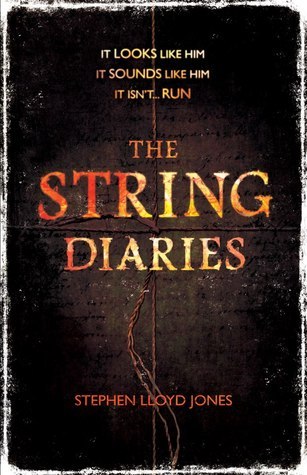
Giveaway - The String Diaries by Stephen Lloyd Jones


Book news - The String Diaries by Stephen Lloyd Jones


A jumble of entries, written in different hands, different languages, and different times. They tell of a rumour. A shadow. A killer.


The only interest that Oxford Professor Charles Meredith has in the diaries is as a record of Hungarian folklore ... until he comes face to face with a myth.

For Hannah Wilde, the diaries are a survival guide that taught her the three rules she lives by: verify everyone, trust no one, and if in any doubt, run.

But Hannah knows that if her daughter is ever going to be safe, she will have to stop running and face the terror that has hunted her family for five generations.

And nothing in the diaries can prepare her for that.

~~~~~


~~~~~

About the author:

Stephen Jones grew up in Chandlers Ford, Hampshire and studied at Royal Holloway College, University of London and is the director of a major London media agency. He now lives in Surrey with his wife, three young sons and far too many books. The String Diaries is his first novel. He is planning a sequel.

~~~~~

Giveaway - 3 hardback copies to be won!


The String Diaries sounds a very exciting debut novel indeed, doesn't it! It is released in the UK on July 4th 2013 and thanks to the kind folks at Headline I have three new hardback copies to giveaway! 

To enter, please leave a comment on this post telling me if you do, or ever have, kept a diary, and how secret it was...

For an extra entry please follow this blog via GFC or Bloglovin' and let me know in your comment that you are a follower. 

This is a giveaway for winners at UK addreses only please, as specified by the publisher. 

***THIS GIVEAWAY HAS NOW CLOSED*** 

Thank you to everyone who entered. Three winners have been chosen at random and contacted, winners to be announced July 2nd 2013.


Tuesday, 26 March 2013

Top Ten Tuesday - Top Ten Books I Recommend the Most


Top Ten Tuesday is a weekly feature hosted by The Broke and the Bookish

The topic this week is - 

 Top Ten Books I Recommend The Most


1. Into the Darkest Corner by Elizabeth Haynes
Quite simply a marvellous, chilling psychological thriller debut which I have recommended countless times to many readers, none of whom, as far as I know, have been at all disappointed.


2. The Secret History by Donna Tartt
One of the few novels I've read more than once, a clever and gripping tale of murder and obsession.


3. The Outcast by Sadie Jones
One of the best debut novels I've ever read, a personal favourite, I read it in a weekend and couldn't stop thinking about it, beautifully written, very moving and will continue to happily recommend it to others. Brilliant.


4. Case Histories by Kate Atkinson
I've bought this one as a gift for several friends to get them started on this author and on the Jackson Brodie series, and also because it is set in Cambridge which appeals. 


5. Revolutionary Road by Richard Yates
I was so impressed by the way searing emotions and damaged relationships are captured in this novel. A wonderful writer. The film version is good in and of itself, but it misses so much of what the book offers, so please do read it.


6. Winter in Madrid by C. J. Sansom
I thought this was a really good read, I was intrigued by the Spanish Civil War aspects and gripped by the mystery, and I find myself recommending it fairly regularly. 


7. The Observations by Jane Harris
Another book that I adored when I read it and would recommend as a really entertaining and well written historical novel with a very engaging spirited heroine for a lead character.


8. The Eyre Affair by Jasper Fforde
I read the Thursday Next series from the early days when they first came out and loved the clever inclusion of so many literary references and witty ideas that Fforde comes up with. A good read for well read book lovers. I'd recommend the series in general but this is the first one so a good place to start!


9. Untying the Knot by Linda Gillard
This was one of my first reads on my Kindle, and it's an atmospheric and very moving story of a couple who seemingly can't survive with each other, but can't be apart either, with the lead male character suffering from PTSD. I would, and indeed do, recommend all the novels by this author that I've read so far, but if I had to pick one just now, it would be this one. 


10. The Mayor of Casterbridge by Thomas Hardy
Some readers love his books, others don't get on with them at all. I'm firmly in the first camp, and this is my favourite of his novels. A brilliant character study of a man and his treatment of those closest to him. Yes it's bleak and dark and cruel, and I love it.

~~~~~
A word on the covers - I've used the image of the covers of the editions I own and read as far as possible here. Some books have had so any versions of the covers, but sometimes I find that part of the memory of the novel for me is attached to the particular cover too, if that makes sense.

Which book or books or authors do you find yourself recommending to someone else to read most often?

Wednesday, 4 July 2012

The Thoughts and Happenings of Wilfred Price Purveyor of Superior Funerals - Wendy Jones


'Wilfred was beginning to realise that the profession of undertaker wasn't much use to him when it came to matters of romance.'

Wilfred Price is the undertaker in the Welsh village of Narberth in Pembrokeshire. One day in 1924, quite unintentionally and just swept up by the moment, Wilfred impulsively proposes marriage to a girl, Grace, whilst at a picnic. As soon as he has done it, he wishes he hadn't, as he realises he doesn't love her at all. He decides that he will explain this to her, and believes he can resolve this awkward situation. But extricating himself from what he has done isn't going to be as straightforward as he might have hoped. Wilfred has always taken pride in his work, bearing in mind at all times the guidelines imprinted in his mind by Mr Ogmore Auden, his apprentice-master in all matters funereal. Wilfred was used to a simple life, but subsequent to the events in the opening pages of the story, his life is anything but. He then meets a woman he thinks he really could and does love, and then Grace reveals a secret that will further confuse and complicate matters for Wilfred.

The author has captured these characters beautifully, and painted a convincing, well-observed picture of life in a small rural village, with everyone knowing everyone else's goings-on, and no one wanting to be the brunt of village gossip. At the same time, she illustrates the love of the place and the country felt by Wilfred's father as he digs the graves; 'he was cutting the good Welsh earth, the fields of which had fed his family for generations and which he would in turn nourish with his own body.' This is a place that instills both love and yet imposes a sense of limitation in the inhabitants, 'a town that pretended innocence and only allowed for innocence.' 

Wilfred has a contented life, living with his father, his mother having passed away many years ago. Wilfred therefore has little idea about women and relationships. 'Wilfred didn't know what marriage involved. Because his father was widowed, Wilfred had had no insight into the day-to-day goings-on of marriage, hadn't grown up enveloped in one. He imagined the worst ones were like Punch and Judy's marriage.' When considering a partner for himself, he wonders, 'What did a man look for in a wife,...Was it cooking? Cleaning? Cleaning would be handy: neither he nor his da were very particular around the house and it could get a bit much sometimes.'

This is a gentle and sweet debut novel from Wendy Jones, written with humour and an insight into love, relationships, loss, and the damage that pride and secrecy can cause. The author writes with warmth and compassion towards her characters, the nervousness and delicate feelings as they tiptoe around the truth of their emotions, and she demonstrates a keen awareness of the social situation and restricted possibilities, especially for women, during those times. I found it delightful to read and I look forward to reading more by this author.

Published by Corsair, an imprint of Constable and Robinson


Thanks to the publisher for kindly sending a copy of this novel to read and review.

Friday, 15 June 2012

Wonder Girls by Catherine Jones - Author Guest Post & Giveaway


Wonder Girls by Catherine Jones, published by Simon and Schuster.

I am delighted to welcome author Catherine Jones to my blog! Catherine has kindly written a guest post about the background to, and inspiration for, her new novel Wonder Girls, as well as some thoughts on writing, and on life.

See below for your chance to win a copy of Wonder Girls!


Guest post by Catherine Jones

What caught my eye about the picture of Edith Gertrude Parnell was the cut of her jib.
The first time I clapped eyes on her - a black-and-white shot in a local history book showing Edith standing on Penarth beach preparing to swim the Bristol Channel - she was looking at the camera with an air of watchful defiance.
Like all compelling images, the photo was more than a moment caught on film. It spoke of ambition, bravery, and breaking free, as well as a girl up-to-the-minute in a long-legged bathing suit, with her hair trimmed in a fashionable 1920s’ bob.
In time I discovered more about Edith.  In 1929, aged 16, she swam the Bristol Channel from Penarth to Weston-super-Mare, a distance of 11 miles as the crow flies but more than 20 when the treacherous currents are taken into account.

I started spending hours in Penarth Library, looking at back copies of the town’s newspaper where I learnt Edith, who grew up in the town, wasn’t the first to achieve this feat. 
In 1927, 21-year-old Kathleen Thomas had become the first person to swim this notorious stretch of water – the first person, mind, not woman. All the men had failed! 
I couldn’t let go of this pair of female go-getters, I found their courage so inspiring. Reading between the lines of old newspaper reports, it was clear nobody thought either of them would do it. Comments in the letters pages made the sense of disbelief plain. ‘Why is anybody giving this nonsense the time of day?’ was the gist of much of it.

This set me wondering what would drive young women in a small, Welsh seaside town to attempt such a daring trial. Fair enough, Penarth, five miles outside Cardiff, was known as a ‘swimming town’ with its Men’s and Ladies’ Swimming Clubs, an elaborately-tiled Victorian indoor pool on the promenade and regular galas where all the town turned out in its finery to see boys and girls race to the finish. 
But the chill, grey Bristol Channel, with its currents and sandbars and history of death? What was driving them on? 

There was more real-life derring-do too. In 1928, Amelia Earhart became the first woman to fly the Atlantic when she landed in Burry Port, fifty or so miles further west along the Welsh coast. When it came to women spreading their wings, there must have been something in the air in Wales in the 1920s.

These girls’ stories also chimed with several of my obsessions  – swimming, lidos, 1920s’ fashions, and women not being held back from doing as they pleased. In addition, what has long gone on inside my head is wanting to speak out on behalf of those who don’t have a voice.  Being all mouth and no trousers – not that I’m often caught in a dress – gobbiness has always come easiest on the computer screen, a make-believe version of speaking out in the safety of my own home.

Some days, writing Wonder Girls was like thrashing up and down a swimming pool. It needed stamina but I’d get somewhere. Other days, sitting at the computer was all about diversion. Should I eat the last French Fancy? I could even be reduced to putting a wash on if the weather fit for drying.
Other times I’d go to bed knowing I’d share the black and silence with my characters. I’d never written in the dark before – a strange feeling I’d recommend trying if you want to deliberately discombobulate yourself – but I’d lean down to the side of the bed for a pen and paper because, especially once the book told a real hold, I’d be lying there and Ceci, Ida or Freda would fill my head.
If it came easy or not, a walk along the cliff tops, looking at the choppy waters the real-life girls had crossed always sent me back to my desk determined to do them justice, for part of my drive to write this book was the hope they might take a 21st Century bow for their bravery.

What I like about being published – aside from the thrill of holding a beautiful 21.8 by 14.4cm hardback with a lido on the cover and fancy black-and-white endpapers – is hearing others come clean about their own ambitions.
 ‘I’m writing,’ they say, and when you ask a little bit more you see people’s  faces lift as they give voice to their story. It’s such a thrill to think the 1920s’ Wonder Girls helped me make a novel and now I’m hearing other women – and men – speak up about their own hopes.

 One way or another, writers or not, we’ve all got our own Channels of ups and downs to cross, and keeping at it, carrying hope and a butterfly net to catch our dreams,  well, daft or soppy as it sounds, as optimistic old Ceci might say, ‘Ain’t that the only way to go?’

Thank you so much Catherine.

This link shows amazing footage of Edith Parnell, who Catherine mentions above, swimming the Bristol Channel. 


You can read my review of Wonder Girls here.

WIN a copy of Wonder Girls!

I am really pleased to offer 10 readers the chance to own and read this wonderful book themselves! Thanks very much to the publisher Simon and Schuster for this giveaway. Winners will be announced on Monday 25th June. Thanks and good luck.

This giveaway has now ended, thank you so much for entering. Winners notified and mentioned on giveways page of this blog.

Sunday, 3 June 2012

Wonder Girls - Catherine Jones


'You never know, it might be the start of something,' Ida said. 'Showing people what we can do instead of being told what we can't.'

It is 1937, and this novel opens with an episode during which we meet fourteen-year-old Cecily Stirling cleaning up in a maternity hospital in London, when she is asked by Sister to take a baby out of the hospital. We then meet Cecily again, in 2009, right at the other end of her life, as she makes a new friend, Sarah, and slowly makes new discoveries about the past. Then we are taken back in time to 1928, when change is in the air, and it is there that we begin to learn the story of Ida Gaze and her best friend and constant companion Freda Voyle.

Fifteen-year-old Ida is a strong swimmer, whom we meet waiting by the pool at the start of the 1928 Annual Gala in the small Welsh seaside town that is her home. The setting is beautifully and lovingly evoked so that the reader can picture the scene in their mind: 'the lido was a spectacle in itself. With its curved white walls and blue ralings, it was as handsome as a grand ocean liner docked for good on the headland...it was the largest, bluest pool in Wales with the sky stretching forever as its ceiling. It took your breath away, it really did.'

With Freda's great encouragement and support, and inspired by Amelia Earhart's recent feat crossing the Atlantic in the air and landing in the sea off Wales, Ida declares she is going to be the first person to swim the Bristol Channel, despite a large amount of skepticism from the people of the town, in particular because she is a woman. She will swim through 'the dangerous grey waters which separated Wales from England. Men with muscles like prize marrows were always trying to swim from the town's bach to Weston and being hauled out of overpowering currents halfway. Nobody had done it and nobody thought anyone - let alone a girl - would ever get to the other side.'

As the story progresses, the two best friends go to London together, looking for new experiences and exploring new possibilities, pursuing dreams far beyond the limitations and constraints of those available to them in their hometown. Freda had been the more reluctant of the two to leave. She is described by people back in her hometown as an 'oddball', a woman who stood out in those days because she, like Ida, didn't conform to people's expectations - she 'hated housecraft class as much as Ida did' and wore 'baggy trousers', and 'She noticed things, and understood things nobody else did' and she 'never accepted adults knew better.' They are both breaking free from places and people that would otherwise hold them back, Freda because of how she is judged in her hometown, and Ida because her unhappy parents are so narrow in their views. There is a delightfully apt description of them: 'Having a go at Ida seemed to be the only time they talked to each other. She'd come to think of the two of them as a pair of brackets with nothing in between.' 

The two friends have different experiences of life in the Big Smoke: Ida seeks to build a career in journalism, and Freda intends to train as a nurse, and as they meet with disappointment and success, their friendship must change to encompass these different lives if it is to stay strong or even survive. For Freda, 'it had always been Ida who made her feel whole'. And equally, Freda 'gave Ida's life such detail.' As the reader gets to know the two friends, there are subtle intimations as to deeper feelings between them. But will the two of them ever want the same thing? I would like to write about the rest of the story, but I will not go into it any further here because what happens from here onwards is for the reader to discover themselves - I must merely write that the second half of the story is very moving and revelatory as the future unfolds and life deals its cards to Ida, Freda and Cecily.

I loved the different parts of the story, moving between the past and present, and how the story gradually builds in mystery, and then we have the unravelling of secrets, as the links to the past are slowly uncovered, until the full picture is revealed at the end. 

It was wonderful to experience life with these strong female characters, to endure the pure joys and successes and dispiriting lows and sadness that they lived through, to witness the spirit of these women who broke away, to see how life changed for them and how they changed, who they ultimately became. The author illustrates the way life twists and turns, how we dream of one thing but don't always see what is right in front of us, how much we are willing to do for love and friendship, and the heartache when we can't always be everything that someone else wants us to be. 

The author writes beautifully; the descriptions of people and places are so evocative, taking us back to   times and places now lost to history, and recreating them vividly for us to experience here. It was an added pleasure to read at the end of the book about the real-life wonder girls of the times, and to hear about the background to some of the places in the story. The novel also has a wonderfully atmospheric and fitting cover image and styling.

Freda remarks at one point that she used to enjoy reading her brother's comic when she was younger, 'but you've got to wonder why it's always the boys who get the heroes as though girls can't do brave things too.' Well, not anymore, for here are those brave girls.

I shed a tear as I closed the book, very reluctant to leave these characters behind.

Published by Simon and Schuster on 7th June 2012.

Thank you to the publisher for kindly offering a proof copy of this novel to read and review at their blogger event. 


5/5


Monday, 16 April 2012

Cambridge Wordfest Spring 2012 - A literary afternoon.

I went along to my first ever Cambridge Wordfest last Friday. The festival ran from Friday 13th to Sunday 15th April 2012, but due to other commitments (a friend's wedding and the moving of a greenhouse!) I was only able to attend an event on the Friday. Nevertheless, it was a very worthwhile and rewarding one. I went along to the ADC theatre to hear Margaret Drabble, Helen Dunmore and Sadie Jones read from their most recent works, and talk about aspects of writing. The session was chaired by Festival Director, Cathy Moore, and it is the festival's 10th anniversary this year.

It was very interesting and informative. I must confess that I have read little by Margaret Drabble or Helen Dunmore, and that is something I intend to rectify, starting with The Greatcoat, the latest book by Helen Dunmore which I bought on the day. She was a delightful and impressive speaker and I really warmed to her at this event. It was fascinating hearing about the real background to the greatcoat which she has drawn on for the book. 

I am a big fan of Sadie Jones, having read all three of her novels to date, with her debut novel, The Outcast, being one of my all time favourite reads. So it was marvellous and exciting to have the opportunity to meet her and have my books signed. I must admit to feeling a bit nervous, even though all the authors were very friendly and approachable. My only wish would have been that it could have been longer than one hour. The works which the authors read from are A Day in the Life of a Smiling Woman - Margaret Drabble, The Greatcoat - Helen Dunmore, and The Uninvited Guests - Sadie Jones.

I look forward to attending future festivals such as this one, and others. Did you attend this or any other literary festival recently? Who did you see?


Thursday, 8 March 2012

The Uninvited Guests - Sadie Jones


'It was true: a small group of people was emerging from the gloom of the drive...slowly and all together.'


I am a big admirer of this writer - I loved her last novel Small Wars, and for me and for very many other readers, her debut novel The Outcast is a real favourite. The book jacket for her latest novel, The Uninvited Guests', displays a sticker billing the story as a 'supernatural new drama', so we know straight away that we may expect some extraordinary events as the story unfolds, and that this book will offer something a little bit different. 

The story takes us back to 1912, to the day of Emerald Torrington's twentieth birthday, with preparations underway for her party that evening. Meanwhile, their country home, Sterne, is at risk of being lost, if stepfather Edward Swift cannot find some quick solution to their financial woes. His wife Charlotte still mourns her beloved first husband Horace, and children Emerald, Clovis and Imogen 'Smudge' all miss their father; Clovis in particular regards his stepfather Edward with disdain, and Emerald is in tears, realising 'that the resented step-parent was now her devoutly wished-for rescuer'. Edward sets off to Manchester to seek the necessary funds by whatever unhappy means he can. We learn though that the Torrington family has lived here and there, and that Sterne is not an ancestral estate at all. Then news filters to the house that there has been a rail disaster on a nearby branch line, and that survivors will need temporary shelter at Sterne. This unsettles the family and guests in place for the birthday supper, and much uncertainty ensues as the mysterious group of survivors arrives, and the family fails to deal adequately with the resulting situation at first, as their usually ordered, rigid existence is disrupted. 

I enjoyed this strange novel, a combination of an Edwardian country house drama and an unsettling ghost story. I loved the very witty and wry commentary and sharp observations from the author on the characters and their behaviour. The three children are all interesting though not particularly likeable, perhaps with the exception of young Smudge. Emerald wonders the garden talking to herself, and doesn't initially seem particularly fond of any the guests coming for her birthday. Clovis seems sulky, selfish and spoiled. Smudge is evidently used to entertaining herself much of the time; indeed 'Smudge was very often forgotten', and there are a couple of hilarious incidents of Smudge's own making involving Lady, the horse. 

Equally clever and entertaining are some of the descriptions, some real gems, in particular one about a 'low settee. This item of furniture was best suited to polite perching as the seat was broken entirely; it was but an empty promise of a seat.' I could often visualise scenes in the novel from the vivid descriptions. This tale takes a sinister, unsettling turn when the strange uninvited guests appear, seeming at first to be one huge mass, and appearing to increase in number. There is no word of assistance from the Railway, and then another man arrives, Charlie Traversham-Beechers, who immediately unsettles some of the birthday guests and his unsettling presence will bring about revelations and change the course of the night; ‘he was like a magnet, the air was thick with the pull of him’. For some of the members of the family, and some of the guests, there is a transformation or an insight into themselves and their true feelings by the end of the novel, a self-realisation which brings joy for some of them and instills a degree of acceptance and kindness into others, bringing about unexpected alliances. It's difficult to say more without spoiling the story for other readers. If you are open to a different style of novel, you might just find this one rewarding. 

~~~~~

Published by Chatto & Windus on 22 March 2012. 


~~~~~

Thursday, 1 March 2012

When Nights Were Cold - Susanna Jones


'We could all go mad in the mountains together.'


I love walking in the fells of the English Lake District, and in Snowdonia, and have done since I was a young girl. This book really appealed to me, telling as it does the story of four young women who grasped at their freedom and embarked on daring mountaineering excursions, with dramatic, tragic consequences. For me it lived up to its promise.


Grace Farringdon is a young woman in the early 1900's who is determined to escape a life of marriage and housewifely duties to get out into the world that she has learned so much about from her father, with whom she recreated the polar expeditions with maps, her 'darning needle representing Ernest Shackleton', and her father's 'button, Captain Scott'. Against her parents' wishes, and unlike her sister Catherine, she breaks free from her family, applies for and takes up a place at Candlin College, aided by financial support from her Aunt Edith in America. There she meets and befriends Leonora Locke, Cecily Parr and Winifred Hooper. Grace forms the Antarctic Exploration Society and together the four of them spend evenings studying and recreating the great explorers and their routes in their attempts on the South Pole. Grace dreams of one day being part of such an expedition. In the meantime, she contents herself with practice with her fellow mountaineers, first in North Wales, then in the Alps at Zermatt. 

The different personalities of the four women explorers are interesting in their contrasts; for Grace, 'the purpose of the society is to conduct serious research...we're following Scott's preparation for his next expedition and learning from past ones'; whereas for Locke, who is fun, friendly and dreams of a future in acting, she sees that 'we have a lot of larks, really, don't we?'; Then there is Hooper, who looks forward to marriage to beau Teddy and a traditional life as a wife and mother after college, and who is nervous about walking in the mountains, and Parr, who is enigmatic, quiet yet forthright in her views, and unlike Locke and Grace, Parr is against the Suffragette movement. Parr brings prior knowledge of the mountains to the group, her Aunt and Uncle already having climbed extensively. But Parr has also suffered a tragic familial loss on the mountains. Though Grace befriends them both, Locke and Parr are never entirely friendly towards each other, and Locke gives a marvellous description of her chilly impression of Parr: 'I expect glaciers form under her gaze, avalanches hear her hard voice and turn straight back up the mountain.' The four of them embark on their expeditions, with the world around them on the verge of change, and nothing will be the same ever again for any one of them after their trip to the Alps. 

We hear from Grace at the time everything was happening in her life, and then fifteen years later, just merely existing in the Dulwich family home, where she tells us 'I am shivering in my memories.' She is looking back, as the only survivor of the four in the group, with her memories unclear and clouded, her mind uncertain in it's recollections, and she conjures up people from her past into her present, but are these just imaginings, are they real or merely ghosts? What really happened on the mountains?

Susanna Jones effectively conveys the excitement of the young Grace, her desire to escape the constraints of home and the restrictions imposed by society due to her gender, and get out into the world; her fascination with the polar explorers, and equally, the sadness of the withdrawn figure who looks back and ponders how hope and friendship turned to disaster, guilt and loneliness. This is the first novel I have read by this author and I found her writing a pleasure to read. 

When Nights Were Cold is an atmospheric read with an appealing storyline combining social change, friendship, adventure, excitement and tragedy - I loved it.

~~~~~


Thank you very much to the publisher for sending me a copy of this novel to read and give an honest review.


Published by Mantle on 1st March 2012 ~ available in hardcover and e-book editions.


~~~~~

Friday, 25 March 2011

The Outcast - Sadie Jones

I thoroughly enjoyed this novel and read it hungrily. I love the style of prose she uses, it seems to entice the reader on and on for more the way it is written. 

Sadie Jones sets these events during the 50's and successfully conveys the stifling atmosphere the characters are enduring. 
The central figure is the troubled youth and then young man, Lewis Aldridge, at first living with his mother and awaiting the return of his father from WWII. A tragic event means things will never be calm again for Lewis. He struggles to be a part of the community around him, and this community in turn isolates him and regards him with a mixture of fear and disgust. One figure who remains fond of Lewis is Kit Carmichael, who herself has her own hidden familial demons. The Carmichael family will prove to influence the events in Lewis' life as the novel plays out. 

I love how Lewis and Kit don't fit in with the roles that have been thrust upon them by their families and the events that have taken place. 
It was marvellous to read a novel about someone (Lewis) who doesn't fit and has suffered at the hands of fate, and through the ignorance and lack of compassion of others, and their inability to discuss and deal with the truth, especially emotions, which is a mark of the times they were living in. Jones allows us right inside his head, to painfully read of his agony, his confusion, his deep hurt. Equally compelling is the struggle and inability of his father to wholly accept and love his son without judgement. 


5/5 A favourite