Book Reviews

‘The best moments in reading are when you come across something - a thought, a feeling, a way of looking at things - which you had thought special and particular to you. And now, here it is, set down by someone else, a person you have never met, someone even who is long dead. And it is as if a hand has come out, and taken yours.’ Alan Bennett

“Many a book is like a key to unknown chambers within the castle of one’s own self.” ― Franz Kafka

Showing posts with label modern. Show all posts

Tuesday, 19 November 2013

The One Plus One - Jojo Moyes


Jess Thomas is a single mum, working hard both as a cleaner and barmaid to make ends meet, caring for her young daughter Tanzie, a prodigious maths talent, and for shy bullied teenager Nicky, her absent husband’s son from a previous relationship, to whom Jess is the nearest thing to a stable parent. Affluent Ed Nicholls has a high flying career running a very successful software company with University friend Ronan, but an unfortunate encounter with a woman from his past is about to bring Ed’s world crashing down around him. Jess and Ed’s paths are destined to collide; what is surprising, funny, poignant and uplifting is how wonderfully this plays out.

I devoured this new tale from Jojo Moyes, it was a real delight to read. By turns a funny, sweet, honest and tender portrait of modern life in Britain; concerned with families, work, money and the lack of it, insider trading, and ultimately, heartfelt romantic love. It feels that this author lives and breathes her characters; the result is they feel so vivid, rounded and real to the reader; a sense greatened by including some chapters from each of four different perspectives. All five of the main protagonists are beautifully drawn, youngsters Tanzie and Nicky in particular. And Norman the dog is adorable! Aspects of the scenario reminded me a little of the lovely film Little Miss Sunshine.

Jojo Moyes has written another absolute winner here – marvellous, eloquent modern fiction.


Source - Lovereading Review Panel
Published by Penguin - 27th February 2014
View other reviews on Lovereading 
Visit the author's website here and find her on twitter here

Thursday, 1 August 2013

Indiscretion - Charles Dubow


'Carelessness is the handmaiden to tragedy. Cataclysmic events often have their origins in the mundane. We turn left when we had meant to go right, and the world changes forever.'

Harry and Madeleine (Maddy) Winslow are a beautiful, charming couple in their forties living an enviable and very comfortable life. Harry is a successful, award-winning writer and Madeleine is his charismatic, warm and admired wife, and attentive mother to their fragile son, Johnny. We meet them in their home in the Hamptons, but they also spend time abroad in Rome and at their home in Manhattan. Everything speaks of ease, wealth, and a good life. They attract others who enjoy being in their company and basking in the glow that seems to emanate around them. One weekend, a woman in her twenties named Claire travels over from New York City to the Hamptons, invited by a boyfriend, and meets Harry and Maddy whilst there. Having met them, she is entranced by the couple and their lives and world. 'It's hard not be caught up in the beauty of life from a summer lawn in the Hamptons', we are told. It is when this attraction and excitement becomes a stronger sort of desire that danger starts to loom on the horizon, and then one night, there is a conversation, nothing more, but Walter warns us that the 'wax seal of a secret letter has been broken. Nothing can make it whole again.'

There are four main characters here though, and the fourth of them is the one who is telling this story. Walter Gervais grew up next door to Maddy and has always loved her; to Maddy they are the best of friends but nothing more. 

'Every story has a narrator. Someone who writes it down after it's all over. Why am I the narrator of this story? I am because it is the story of my life - and of the people I love most. I have tried to be as scrupulous as possible in my telling of it. I wasn't a participant in everything that happened, but after I knew the ending, I had to fill in the missing pieces...'

In Walter, a very memorable narrator has been created. He guides us through the story that he himself is so intricately involved in. For me, he made it a compelling read. Despite his words above though, I was reminded of the words of the novel's prologue, how we can be guilty of 'casting a roseate glow over our memories. Some memories burn brighter, whether because they meant more or because they have assumed greater importance in our minds...' and he goes on to advise that 'I have forgotten so much ...and to fill in the gaps, I conflate the past or make it up entirely...After a while it becomes real.'

This distinctive, involved and biased omniscient narrator had my attention throughout, and had my belief despite my reasons to doubt his reliability sometimes. It's been mentioned that 'the narrator is akin to Nick Carraway in The Great Gatsby', and I feel this is a fair comparison in some ways. 

The author sets the scene, illustrating the established friendships and allowing the newcomer Claire to gradually become part of their lives. As the narrative progresses, the suspense increases and I began to feel an impending sense of the sadness that was surely to come as a result of what happens, but like a voyeur I couldn't look away; I was too engrossed by this tangle of lives which was becoming increasingly, inextricably messy. 

I formed pictures of the main four characters in my mind's eye from the rich way they were described; they became fully formed, human and deeply flawed. At times I found these creations attractive and enviable, but I also despaired of them and judged them harshly.  Through them the writer cleverly spins an entrancing yet cautionary tale of the different ways in which humans love. 

It's an emotional read, with lives that are ostensibly full, with much wealth and successful careers, a feeling of looking in, via Walter, on how the other half lives (including him), yet in Walter's case there is such emotional emptiness. For Claire there is the eagerness of youth seeking out new experiences; the author really captures the urge to be part of something, and the sense that feelings and desire are everything, dominating the life and thoughts of someone at that stage of their life, with no responsibilities and only a short-term outlook. There is a marriage between two golden people, and a friendship and trust that seems so strong. Their marriage is at the heart of this tale throughout. There are passionate, sexy episodes that were convincing; human desire that rises above all sensible, rational reason. 

The novel speaks of the contentment that we think we have in life, or even actually have, and yet that element of human nature, the flaw that means we experience a nagging greed for something else that seems to be missing, that is different and appealing, and yet it often leaves us unhappy even if we reach for it, and we realise the true value and worth of what we already had; 'We want what we want. The bitter truth is that it rarely makes us happy once we get it.' I can't write about what happens here without including a spoiler, but you'll see, when you read. 

I read this story very quickly, gulping down the story and swiftly turning the pages. I had to know how it would all end. I was sad at how it all ended, in fact I felt quite drained after all the emotion. Part of me wonders at a different ending but perhaps what happened was what had to happen.

I thought this was a brilliant, captivating and addictive debut novel, about beautiful people with seemingly perfect lives, and what results when an outsider breaks in on all this and exposes the weakness, changing it irrevocably. It made me think a lot about people and how they behave. It's about love and families, contentment versus temptation, friendship and unrequited love, wealth and envy, greed and lust, fate, guilt and tragedy. I enjoyed it very much indeed. 

Published by William Morrow Paperbacks*

Thanks to the tour host and publisher for sending a copy of this novel to read and give an honest review.


About the author:

Charles Dubow was born in New York City and spent his summers at his family’s house on Georgica Pond in East Hampton. He was educated at Wesleyan University and New York University. He has worked as a roustabout, a lumberjack, a sheepherder in New Zealand, and a congressional aide, and was a founding editor of Forbes.com and later an editor at Businessweek.com. He lives in New York City with his wife, Melinda; children, William and Lally; and Labrador retriever, Luke. This is his first novel.
You can find the author on twitter @CharlesDubow


*UK readers, please note - this novel is published in the UK too, by Blue Door, but I have featured the US cover and publisher as this is the edition I have read in this instance and the edition featured in the book tour I am taking part in. 


Saturday, 16 February 2013

Lydia Bennet's Blog: the real story of Pride and Prejudice - Valerie Laws


‘Well it seems to be a given, when a bloke’s made his pile (or waited for his Pa to peg it), he’s ready to commit longterm and install some ‘lucky’ woman to like, run his crib and die having his babies.’

Recognise this? Or think it sounds familiar in a strange sort of way? Welcome to the blog of Lydia Bennet. This book rewrites the much-loved story of Pride and Prejudice from the viewpoint of Lydia, who is a thoroughly cool and fashionable fifteen-year-old girl with a very modern turn of phrase. She introduces us to the idea behind her ‘blog’: ‘Well, me and my buddies on the Net are wayyy too cool to read or write those boring ladylike journals! That’s ‘buddies’ from ‘rosebuds’, we being young, sweet, innocent maidens (irony alert!). So we started to write our goss and news in our own style, in our ‘buddies’ logs’ or ‘blogs’ for short, and pass them around our Network, or ‘the Net. Geddit? Readers are therefore immediately aware of their very hip and with-it narrator from 1811!

Lydia proceeds to guide us throughout the story we know and love so well, putting her own unique and honest perspective on people and events. She is obsessed with the arrival of the soldiers in Meryton, in particular Mr Wickham, ‘who’s hotter than a heatwave in hell’, and tells us about the much-anticipated arrival of ‘Blingley, as I like to call this loaded incomer.’ Lydia comes across here as a smart, sassy and sussed teenager, or at least that’s what she seems to think of herself! And what is her first impression of the esteemed Mr Darcy? ‘Darcy. Arsey more like. Oh dear, he thinks he’s all that, and with reason to be honest. Handsome, if you like them snooty, looking down on us all and not just because he’s tall.’ As Kitty races to tell her sister, ‘he’s dead loaded! He’s got ten big ones a year!’ Money is as always the driving force behind the matchmaking here.

Valerie Laws has successfully employed the speech and behaviour of a modern teenage girl and incorporated this into the character of Lydia living back in the early 1800’s, making her story an amusing mixture of the historical and the humourous. There are some interesting new ideas about Mr Collins and Charlotte Lucas, and when Lydia refers to what Jane or Elizabeth have said, the words she reports that they used will often be more in the style of the original text, making clear the contrast with Lydia’s style. The Lydia we meet here is cheeky, clever and at times sneaky, as well as being very funny in her observations and remarks. The author displays an impressively thorough knowledge of the original material in her retelling.

If you are open to the idea of such a classic being handled in this way, you might find this, as I did, a clever, funny and entertaining read, cleverly adapted by the author to put the story into the hands of Lydia and show everything through her unique eyes with a very modern touch that had me laughing at times.

If the idea of it really doesn’t appeal, fair enough. I must admit I don’t particularly seek out books that look at the classics in a new or different way; without wanting to prejudge them, I usually prefer to read the original books. However, the author approached me to read and review this book and I was amused, entertained and impressed by it. I thought some aspects were very cleverly done, and above all it reminded me what a wonderful and timeless story the original novel offers us and how much I love that book.


Thank you to the author for kindly sending me an ebook copy of this novel to read and review.


Lydia Bennet's Blog: the real story of Pride & Prejudice is Valerie Laws's eleventh book, and her first e-book as an indie author.

Sunday, 3 February 2013

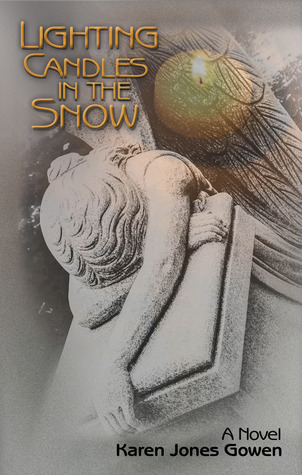
Lighting Candles in the Snow - Karen Jones Gowen


‘You can live with a person for years and still not know him.’


Karoline London is twenty-nine years old. She has finally had enough of the way her husband Jeremy has being behaving towards her, and when he ruins the special evening they had planned for their sixth wedding anniversary, she realises she can't take anymore.

Thus begins a new period in Karoline's life, coming to terms with being alone again, filling her life, and when changes occur at work, something that has always shaped her days, her routine becomes even more altered and she grapples to keep a hold on her life. She has the support of her older sister Suzie, who is happily married with lots of children, and who therefore lives a very different life to Karoline. 

We follow Karoline through these difficult, transitional events in her life, through times that challenge her to be strong and to come out the other side. Karen Jones Gowen presents a warm-hearted and convincing portrait of a woman faced with major changes in her life, going from full and active days to being alone and bored.

This is an engaging, thoughtful novel, insightful regarding relationships. The author writes openly and movingly, creating a character many women will empathise with.

However, she also creates a complex, damaged character in Jeremy; he is not as straightforward as he seems, and through him the author explores the nature of self-doubt and the crippling damage of past pain that has been buried inside. She also touches on the idea of love and acceptance of all of a person, not just the good but the bad as well.

The idea of living and loving and thereby risking getting hurt in life or feeling safe but lonely by hiding oneself away is considered by Karoline: ‘What kind of life is it anyway if the sole purpose becomes saving oneself pain? Then why get married, why have children, why do anything? Why even walk outside your door, because you might get hurt? Just sit alone in your house day after day with nothing but the TV for company, to save yourself pain.’

I liked how the story developed, and the introduction of another character telling a little of their story towards the end of the novel, which sheds light on the past, was very effective and nicely done.

The setting is Salt Lake in Utah, and I found it fascinating to learn a little about this area.  Many recipes of the meals cooked or eaten in the story are included at the end of chapters which is a nice addition. I really enjoyed reading this moving and perceptive novel. 

Published by WiDo Publishing

Thanks to the author for kindly sending a copy of this novel to read and review.

You can follow the author on twitter @KarenGowen and visit her website here. 

Tuesday, 20 November 2012

Love Virtually - Daniel Glattauer


Translated by Katharina Bielenberg and Jamie Bulloch 

'I've fallen in love with your words.'


I love how this novel starts. It’s a lovely, amusing bit of confusion and genuine error that leads to a pair of strangers being in contact via email. Once they are in contact, they exchange a few messages, and then they begin to enjoy the correspondence with each other, and start to reveal more about themselves and to share aspects of their lives, their hopes and their pain.

The email format of the narrative and the way this allows us to peek directly at the personal and intimate thoughts being exchanged between these two people alone means this is a very pacy read and one that makes the reader very inquisitive.

There is an excitement and urgency to the correspondence when it is in full flow:

‘Isn’t it exciting that you can get involved with someone you don’t know, someone you’ve never set eyes on and probably never will, someone you expect nothing from, of whom you can’t be sure that you’ll ever get anything halfway adequate in return?’

The tension is strong and builds as the book progresses and the relationship grows. Things start to become more serious, perhaps they do start to expect something from each other, and where will this lead? In particular there is the major question of whether Emmi and Leo will indeed every meet each other face to face.

I felt that the author has gotten to the heart of both his characters, written both of them with warmth, and created humour, romance and also sadness between them. They are complex characters, believable and flawed. Emmi is married after all. Why is she even seeking this closeness with another man?

It’s a fun, modern and intelligent romantic read. It makes you think about how much you can really get to know someone through written correspondence. Before it would have been letters, here it is emails. But the sentiment is the same, and therefore it gives the story a timeless edge too. Can a man and woman fall in love and feel a strong bond without having met? Will they every meet?

You’ll have to read to find out! Recommended.


Published by Maclehose Press, an imprint of Quercus

Thanks very much to the publisher for kindly sending a copy of this novel to read and review.

Reviewed by Lindsay Healy

There is a sequel to this novel, entitled Every Seventh Wave.

You can follow the twitter account for the book @lovevirtually 

Monday, 27 February 2012

Cells - Harriet Grace


'She looked for the cells in the ripples of water, black shapes darting away in the sunlight, joining up, dividing...'


Martha Morgan is the features editor on 'The Chronicle' newspaper in London. It's a fast paced working environment. Her partner Grant is a psychoanalyst. They both have successful professional lives, they have a lovely home, but they have been trying to have a baby, without success, even after undergoing IVF treatment. They are 'one of the ten per cent of couples who have unexplained infertility.' The novel is written with alternate chapters giving us an insight into the lives of Martha, Grant, and of a third person, Jon, who works in Martha's office, as part of the mail and communications team, essentially as a messenger. The novel lets us into the minds and everyday lives of these three people, both when they are alone and when they interact with each other. We are privy to their doubt-riddled introspection. 


Martha isn't certain she even wants a baby at times, but she is frustrated at not being able to have one. We learn that Martha 'became obsessed' during the IVF treatment, and 'everywhere she saw twisting umbilical cords with no babies on the end of them.' Martha receives counselling after the failed treatment, and the idea of donor insemination is introduced. Martha seems drawn to Jon instinctively, as if he could somehow be an answer to her problems. She offers him Grant's old computer, and he comes to their house to be shown how to work it. The two men each derive something from their meetings; Jon sees Grant as a someone to talk to about his life, so that the relationship alsost becomes one of Doctor and patient, whilst Grant can see how much Jon is opening up to him, but he then becomes uneasy at this, thinking 'they had got too close'. Jon seems a very naive person at first, and comes across as scared when with women, nervous about the possibility of intimacy and a relationship. In fact he is very lonely and a bit of a misfit. He begins a relationship with a woman he meets who works in a shop when he is out and about one weekend. The way he thinks about her shows his inexperience, his fear of not being accepted. He seems obssessed with her. 

The relationships between Martha, Grant and Jon, and each of their respective sets of parents is also explored. Martha has unsettling flashbacks to times with her depressed father, remembering the closeness shared between her brother and her mother. Grant felt shut out by his mother and his sister Lani, he feels he has something to prove to them both. His mother becomes very ill and he returns to the USA to be with her, and spends time whilst there thinking back over his relationships with them both. Jon visits his parents and the tension between him and his father is palpable, yet his mother seems to have changed and this confuses him. The author successfully conveys how each of them has been shaped to an extent by their childhoods. 


There is a lot going on for these three people; we see what is happening in their lives, and what is going on under the surface. At first I found all three characters rather unsympathetic, and it took a while for me to become involved in the story and to warm to them more. The story developed in unforeseen ways, and I did grow to care about these people and wonder what direction their lives would take now. The ending is rather open to an extent. It left me pondering, what would they all do now? This is an intriguing portrait of three people each at difficult points in their lives, struggling with their inner feelings, wondering what direction to take, when their lives become entwined and the consequences of this. I enjoyed having the three different perspectives to read; three very different, interesting voices. The author writes intelligently about the effects of the past on people, and successfully conveys all the emotion, anxiety and insecurities that these people are battling with inside. A fascinating read. 


~~~~~

Thank you very much to the publisher for sending me a copy of the novel to read and give an honest review.

'Cells' is published by SilverWood Books and available now in paperback and e-book formats.


Visit Harriet's website to find out more. Harriet is part of loveahappyending, supporting new authors.


~~~~~

Wednesday, 22 June 2011

A Tiny Bit Marvellous - Dawn French


Very marvellous if you ask me! I really enjoyed this novel.

About the Battle family, it is narrated from the viewpoints of Mo, the mum, who is on the cusp of her 50th birthday, Dora, teenage daughter on the verge of her 18th birthday, and 16 year old Peter aka Oscar, teenage son. Mo is a child psychologist, cue lots of misunderstandings with her own children, mainly her daughter. Mo is worried that she has suddenly become old and grey, and lacking something.
Dora first comes across as a bit annoying but then I began to feel for her as all the insecurities and pressures of being a teenage girl came through in her portrayal. She is very much a teenager of today, updating her facebook page all the time, worrying about her appearance, feeling pressures from all around.
Oscar was my favourite character, his chapters were so amusingly written, so witty and enjoyable, as Peter adopts a persona akin to his hero Oscar Wilde, including renaming himself Oscar.

Other key characters, who we hear about through Mo, Dora and Oscar, are Pamela, Mo’s mother and the kids’ grandma, and Dad, who also has one chapter in his own voice near the end of the book. Pamela proves to be a wise old lady, offering sage and pertinent advice to her daughter, son-in-law, and to both grandchildren, who all find tea, cake and sympathy when they visit her. At times they all feel she is the only one to understand them.

This is an enjoyable read, funny and witty at times as you might expect given the author, but also moving, touching and real, with some great characters to love and/or hate!